Editor's Note: This article originally appeared in the July 2025 print edition of Lawn & Landscape under the headline “No more need to hesitate.”
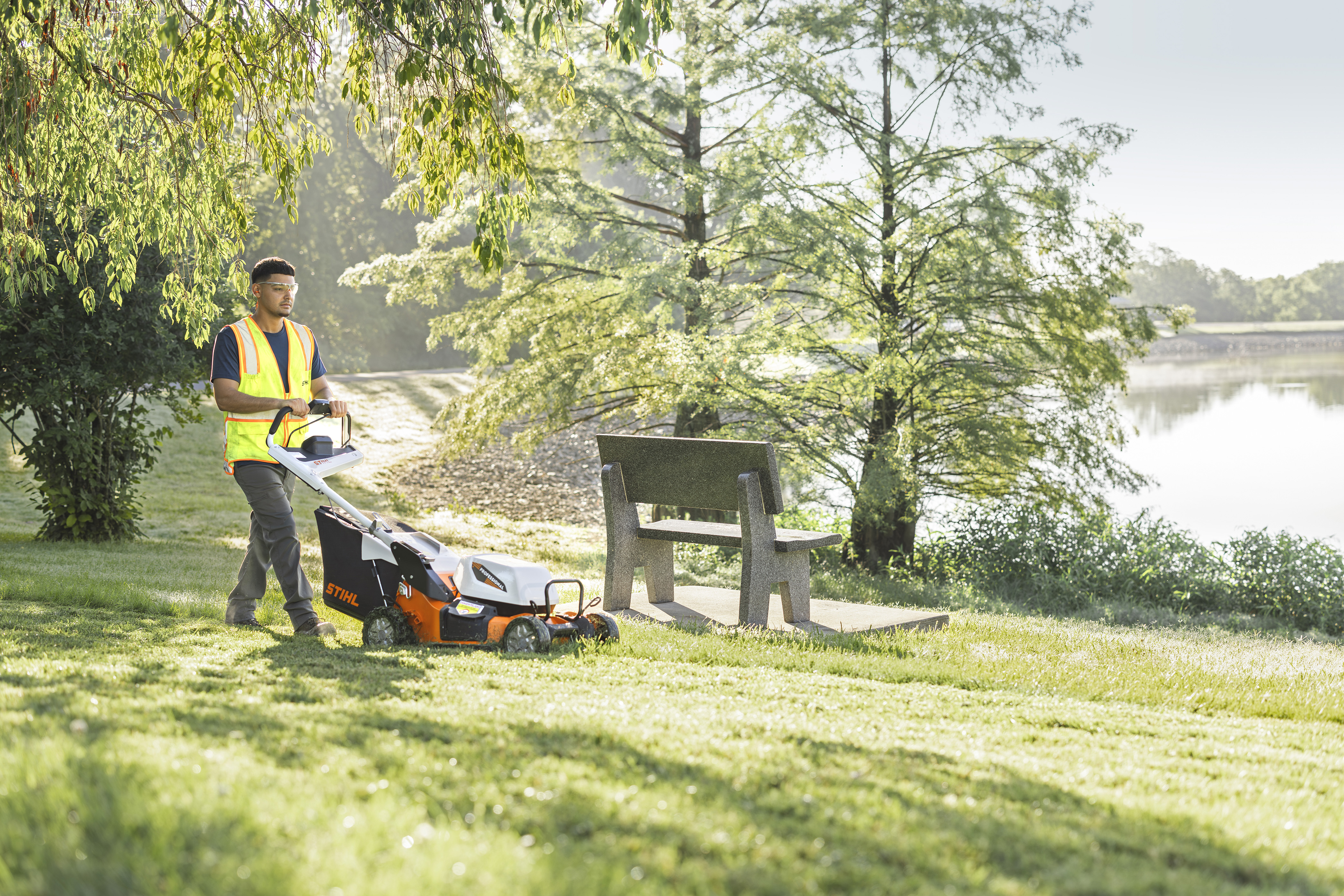
As the technology behind it continues to advance, more contractors across the country are opting to use battery-powered equipment.
And with these advancements, there’s no more reasons to hesitate when it comes to making the switch.
Take Wesley Hack, founder of Hack’s Landscaping Creations in Millville, Pa., for example — Hack has been fully electric for over five years now and has seen several iterations of battery-powered equipment over the years.
“They’re getting better with the kilowatts and ramping that stuff up,” he says. “We adopted so early, so half of our fleet is still the older generation and then we’ve been working to upgrade to the newer stuff. The older stuff, sometimes you can’t get a full day in versus the new generation mower which is mind-blowing. You can go almost two full days on a charge — it’s just amazing…The next generation machines blow gas right out of the water.”
Lawn & Landscape interviewed five contractors from across the company for their opinions on battery powered landscaping equipment and their thoughts behind some of the common hindrances for making the investment.

“Quiet on Set!” No Noise
It seems one of the most noticeable differences between battery powered landscaping equipment and its gas counterparts is the decrease in noise they make.
Jenn Foster, co-owner of E-Scapes Electric Lawn Care in Acworth, Ga., says their all-electric maintenance services are sought after for a variety of reasons dealing with noise reduction.

“People who work at home, or have special needs, and can’t be around loud noises — the all-electric equipment is much quieter,” she says. “Not only for the operator but for those who are present during the service as well. It’s something that’s pretty substantial for those who work from home.”

Nate Moses, CEO of Greenville, S.C.’s Precision Landscape Management, agrees — adding that in the era of work from home, no one wants to be interrupted mid workday by the maintenance crews.
“We’re primarily in residential landscaping, so being able to use quiet equipment has its advantages,” he says. “We’re not worried about waking sleeping babies or disturbing our homeowners while they’re inside. Especially with working from home being a more popular option now, we don’t want to be known as the landscapers who came and ran noisy equipment while they were on their conference call.”
And it’s not just customers who appreciate this — crews do, too.
Shawn Jones, owner of 417 Mowing in Springfield, Mo., says he and his 18 employees all benefit from not hearing the roar of the engine all day every day when using their battery-powered blowers.

“The biggest advantage I see is the reduction in noise,” he says. “I’ve been doing this forever and I do have hearing loss even though I wear hearing protection. So anytime there’s going to be an opportunity to implement something at a lower decibel, it’s something I will take into consideration.”
Jones notes it can be difficult at times to get crews on board with battery-powered equipment because they seem to equate that noise with power.
“It’s a hard sell,” he says. “Everybody is used to gas-powered equipment, and I suppose the more noise the more power they think. If they’re not able to make a lot of noise, I guess they don’t seem to think they’re getting as much done. That’s not the case of course, but in the timeframe that those batteries last, it’s very comparable to what a gas-powered machine would be but with less noise and less maintenance.”

“Ready, Set, Go!” No maintenance mishaps
Having less maintenance costs is another big benefit of electric and battery powered landscaping equipment. Time is money, and having to constantly maintain a fleet of mowers and other equipment eats at both of those.
“You’re saving all that money because you don’t have to buy oil or oil filters or belts,” Hack says. “There’s just less maintenance and it’s a big savings if you do the math. The mower pays for itself in no time.”
Mike Bellows, E-Scapes’s founder, says they’ve been switched over to electric equipment for nearly five years now as well. The fuel and maintenance savings have been outstanding, he says.
“When COVID was hitting, and gas prices were spiking, I was getting overwhelmed on how much I was spending on gas and fuel alongside the breakdowns we were having on equipment from employees just not mixing the ratios well,” he recalls. “So, I was trying to figure out an alternative for this, and I had this electric trimmer that I had picked up at Harbor Freight and really loved how easy it was. It never broke down and we never had any issues.”

That’s when he decided to make the investment into battery-powered and hasn’t looked back since.
“We have everything we had that we had from gas,” he says of his fleet. “As far as maintenance, repairs are virtually zero. We had had issues with carburetors always clogging up from bad gas or the elements getting into the fuel — so it was always having to get repaired. It was time and money — just like going to the gas station is time and money. It’s a night and day difference.
“There’s no maintenance except the regular stuff like changing strings or changing blades,” Bellows adds.
Just like there’s no downtime in the mechanic’s shop fixing the equipment — Bellow says there’s very little downtime in the field with the battery-powered machines.
“Employees aren’t out there pulling a string to try and start it,” he says. “It’s pretty much instant. It’s in their hands, they pull a trigger, and it works.”
Seth Buma, partner at Buma Landscaping in St. Augustine, Fla., also sings the praises of batteries boosting productivity. His employees, and subcontractors, are utilizing battery-powered blowers and augers in the field almost daily.

“Training wise, it’s about clicking a button at the end of the day,” he says. “When it comes to the employee side and the maintenance side, it’s become a lot easier as well.
“There’s no loss of productivity,” Buma adds. “It’s reduced the downtime we have on jobsites and the frustrations employees have because of those little things happening because they add up over the months and the years... it’s been a noticeable difference.”
Moses, whose staff also utilizes battery-powered handheld equipment, adds the batteries are pretty reliable and don’t need replaced all that often.
“The batteries stay the same, we’ve noticed good reliability out of them and haven’t had too many pieces of equipment go down. That’s been really encouraging because when you’re taking a gamble on new technology, you’re not always sure how it’ll go,” he says.

“Cleaner & Greener” No more mess
Noise and maintenance aren’t the only things battery powered landscaping equipment are saving on — there’s also less mess involved, something those we interviewed all appreciate.
Buma says the battery-powered augers have been such a game-changer in cleaning up jobsites that it’s inspiring him to look into more battery equipment.

“The battery-powered auger has probably been one of the best tools we’ve ever bought,” he says. “We’re actually looking to build out more of our fleet that way because of how clean and easy it is.”
Buma says he’s had customers commenting on the difference as well.
“We’re very adamant about how clean we keep our jobsites,” Buma says. “Without all the cans to be mixing your fuel with, I have noticed it being much cleaner. It’s just not as dirty and when you’re already getting dirty in the landscape and then you mix fuel with that — it can be kind of frustrating. It’s made it a much cleaner jobsite. Even the clients have mentioned how much cleaner it is than having all the gas equipment out.”
Foster notes not only is the equipment cleaner for the jobsite — but it’s cleaner for the crews’ wellbeing.
“The health of the operator is important, too,” she says. “With using all electric, there’s less chance of liability for us as a company in terms of hearing loss or health issues because of the fumes or various things that can occur because of gas equipment.”
Bellows says they’re being selected by clients who are craving a cleaner, more sustainable landscaping approach.
“They are definitely reaching out,” he says of customers seeking all-electric lawn care. “The ones we already had during the switch thought it was the coolest thing. But a lot of people will get us just for our reputation — but there are a lot who go with us because we are electric, and they want that kind of service. People are starting to get aware of how great it is. They see all the benefits that come out of it. It’s amazing. It’s great to lessen the carbon footprint of course, too.”
Foster says just recently they got a call from someone who really wanted all-electric landscaping but was fearful it’d be out of their price range.
“She wasn’t sure if she could afford it…almost as if the service was too VIP or too expensive… that’s something we want to be known for. Just because we’re fully electric, that doesn’t mean it’s unattainable or something you can’t have for your property,” she says.
Bellow agrees — saying they’re not VIP in price but VIP in experience.
“It is a VIP service because it’s so much cleaner and quieter,” he adds. “Even the guys working out there don’t smell like gas and they don’t have the extra smell and sweat from the exhaust and the heat of the exhaust. It’s just a big difference in the way they look. That doesn’t mean we have to reflect it in the pricing, but it does look and feel like you’re getting a VIP service. The homeowners just love it.”
While E-Scapes may not be charging a premium for their battery-powered mowing, some are, including Jones and 417 Mowing.

“We have a few 21-inch electric mowers,” Jones says. “One day a week I send out a crew that does push mowing, bagging and specialty yards. We do charge a premium for that because normally we’re using a 30-inch machine for productivity. There are several customers who have requested electric machines, and we charge a premium to go down in size on the deck — just because it takes longer. So really, it’s only a handful of lawns that we mow with the electric mowers.”
Jones adds in a typical week, they’re servicing 500 lawns, which he says is too many to rely solely on electric equipment.
“We’ve tried them out, but we do such a volume on each crew that the battery power just isn’t there to get us through the day,” he says.
“Be on the Cutting Edge” No pressure
As some states and municipalities start to see mandates banning gas-powered equipment, the green industry can expect those to continue.
However, Jones says where he’s at in the Midwest isn’t experiencing any of those yet, which means he can take his time on adoption.
“Here in Missouri, we’re in kind of a rural area, so there’s not really a push from the government to make us use items like that,” he says. “So, it becomes a ‘if it’s not broke don’t fix it’ kind of thing.”

Hack says from a sustainability standpoint, battery powered landscaping equipment isn’t going anywhere and that’s why more companies should be making the switch. He notes where he’s from in rural Pennsylvania he’s practically the only one utilizing the equipment.
“We’re still the only people in our area who are running 100% electric. No one wants to do it — I don’t understand why,” he says.
“Electric definitely is the future, whether people like it or not,” Hack adds. “There’s just been too much investment in it. People have to get on board — I don’t think they’re going to have a choice. I don’t know how you can keep burning all these fossil fuels for the rest of our lives. Aren’t we going to have to have other alternatives?”
Moses also notes it’s important not to wait too long to start experimenting with battery-powered equipment.
“In our area of the country, there’s not a lot of pressure for this — there’s no restrictions or anything like that. The use of battery-powered equipment is all kind of voluntary,” he says. “(Battery) is the future. So, to resist it all together I think is naïve. I wanted to make sure that with the new technology — even if it was 10 or 20 years before there was pressure put upon us to use it — I wanted to make sure it wasn’t a change we’d have to make under pressure or under duress but rather that we were confronting the future and facing it head on.
“I encourage landscapers to lean into it,” Moses adds. “You don’t want to be put into a position where you’re forced to do something and you have no idea, and very little time, to approach integrating it into your fleet.”

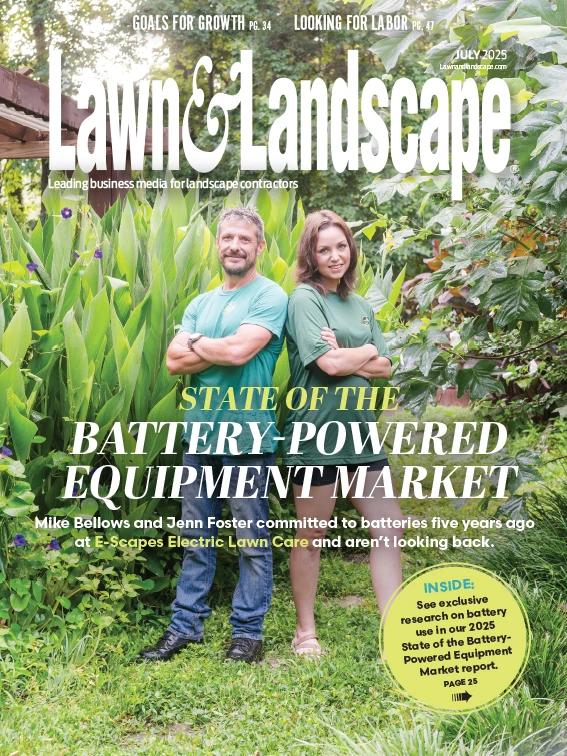
Explore the July 2025 Issue
Check out more from this issue and find your next story to read.
Latest from Lawn & Landscape
- The Harvest Group opens registration for virtual series on compensation strategies
- Granum, Weathermatic enter multi-year strategic partnership
- Rockit Pest adds Green Solutions Lawn & Pest Control in Tampa
- Riverview Landscapes acquires Cleveland Brothers Landscaping in New York
- LandCare promotes Kelly, Majczan to Northeast leadership roles
- Massey Services has acquired Solve Pest Pros of Jacksonville, North Carolina
- Takeuchi-US names Lisitza, Dickerson as regional managers
- New Holland debuts Workmaster 35C and 40C compact tractors