Adobe Stock | VZ_Art
Editor's Note: This article originally appeared in the March 2026 print edition of Lawn & Landscape under the headline “Developing high-impact account managers.”

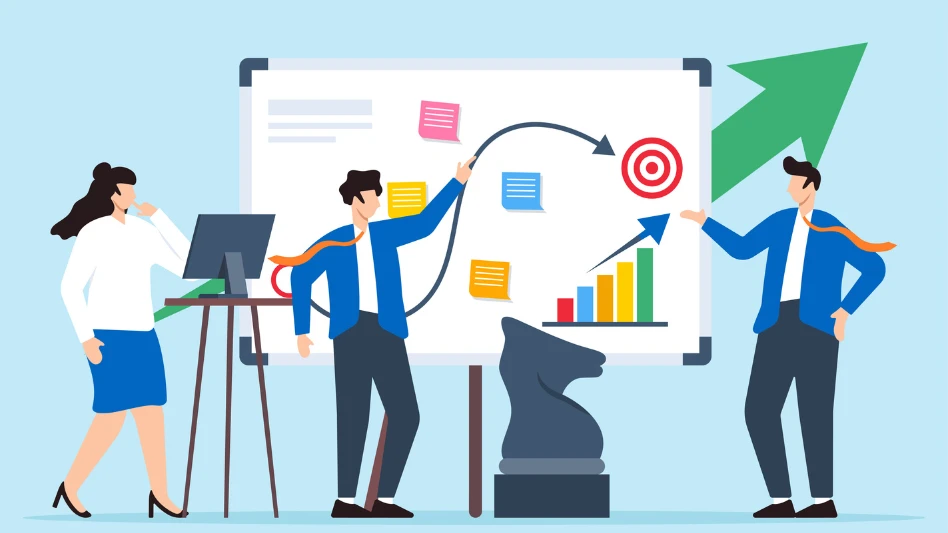
However, if you want to train an account manager who actually moves the needle in the landscape industry, stop thinking of them as just the person who talks to the client and takes the heat when things go wrong or simply sells contracts and enhancement work. I’ve seen too much of that over my career.
If you want an AM to perform at the highest level, begin to realize that they aren't just managing accounts; they’re managing an asset and a relationship. In our business, a great AM is the glue between the promises we make and the reality we deliver in the field. They balance the client’s needs, their teammates and the company to create an outcome that everyone calls a win.
So how does an AM navigate this obstacle course? It takes proactive relationship-building (internal and external) and a clear understanding of how the business generates revenue.
Relationship Building Through a Proactive Approach
A professional account manager must be the most informed person on any property. That means being horticulturally knowledgeable and knowing exactly where to go and whom to involve in resolving issues as they arise. It also means spending time with the production team to understand how work is performed in the field.
When an AM walks the property with a client, they should be the expert, pointing out issues or improvement suggestions they’ve already identified. Being the expert comes from mastering high-quality “site audits” performed regularly before client walkthroughs. With every client interaction, you are either building or eroding trust. If the client points out an issue, you’re inviting them to question your expertise. Trust is the currency of long-term retention. It drives enhancement work, contract renewals and long-term relationships that competitors struggle to disrupt.
Remember, we don’t "upsell" our clients; we provide solutions and peace of mind. We identify safety issues and enhancement opportunities while creating environments that serve their employees and visitors. We help clients plan and present themselves well to their leadership.
Trust and a proactive approach are what fill the “gap” between a 70% and 95% or higher retention rate. This is the space between what the client expects and what a trusted partner delivers.
Creating a Unified Team. Operational synergy starts with the daily huddle, a 10-minute touchpoint between the AM, the operations manager (OM) and key team members that keeps everyone aligned on priorities and challenges. It’s a culture-building exercise that fosters mutual accountability and understanding.
The AM must be a leader without necessarily being the boss. They are the bridge between what was sold and what can realistically be delivered: clear work orders, realistic expectations and respect for the production team matter.
How do you write a bulletproof work order that actually makes sense? How do you set up a jobsite so the crew can win? When the AM treats the field staff as internal customers, quality improves. When quality improves, retention follows. It’s a straightforward cycle — but it requires discipline.
Over the years, I have seen plenty of friction between sales and operations. The best AMs are diplomats who recognize that strong working relationships with the OM and crew leaders are essential to success.
And Then There Are the Numbers. As much as an account manager may dislike it, numbers are vital. A high-level AM must understand job costing, man-hour rates, gross margins and company profit goals. A promised "quick favor" to a client that takes three or four man-hours can quietly erode margin, damage morale and reduce profitability for the task or the day.
When an AM understands that their job is to protect the production team's efficiency as much as it is to please the client, they begin making better decisions. They stop over-promising and start managing expectations through properly scoped enhancements and change orders.
The role of the AM must evolve from a simple point of contact to a more sophisticated leader in the field who understands the company's financials and the operational drivers behind sustainable growth.
Ultimately, developing high-impact account managers requires focusing on key strategies for training effective leaders who can walk onto any property, assess it with a horticulturist’s eye, evaluate it with a financial mindset and read client reactions. Moving from vendor to indispensable partner or friend is how companies protect retention, strengthen teams and lead their markets.

Explore the March 2026 Issue
Check out more from this issue and find your next story to read.
Latest from Lawn & Landscape
- Our March issue is now live
- New Holland Construction's E12D mini excavator
- Caterpillar enhances Cat Rentals for modernized experience
- Work Truck Week's kickoff Green Truck Summit event to rebrand as Future Truck Summit in 2027
- Kubota's SVL110-3 compact track loader
- Green Lawn Fertilizing/Green Pest Solutions donates $100K to Children’s Hospital of Philadelphia
- Bartlett Tree Experts adds Lee Gilman & Associates
- Stay Green acquires JH O'Brien in California