Editor's Note: This article originally appeared in the March 2026 print edition of Lawn & Landscape under the headline “What’s driving the numbers?.”

Every year we publish our Benchmarking Your Business Report — where our exclusive data takes a deep dive into the numbers behind green industry companies in North America.
See how you stack up against your colleagues near and far from home. Jump here for this year's Benchmarking numbers.
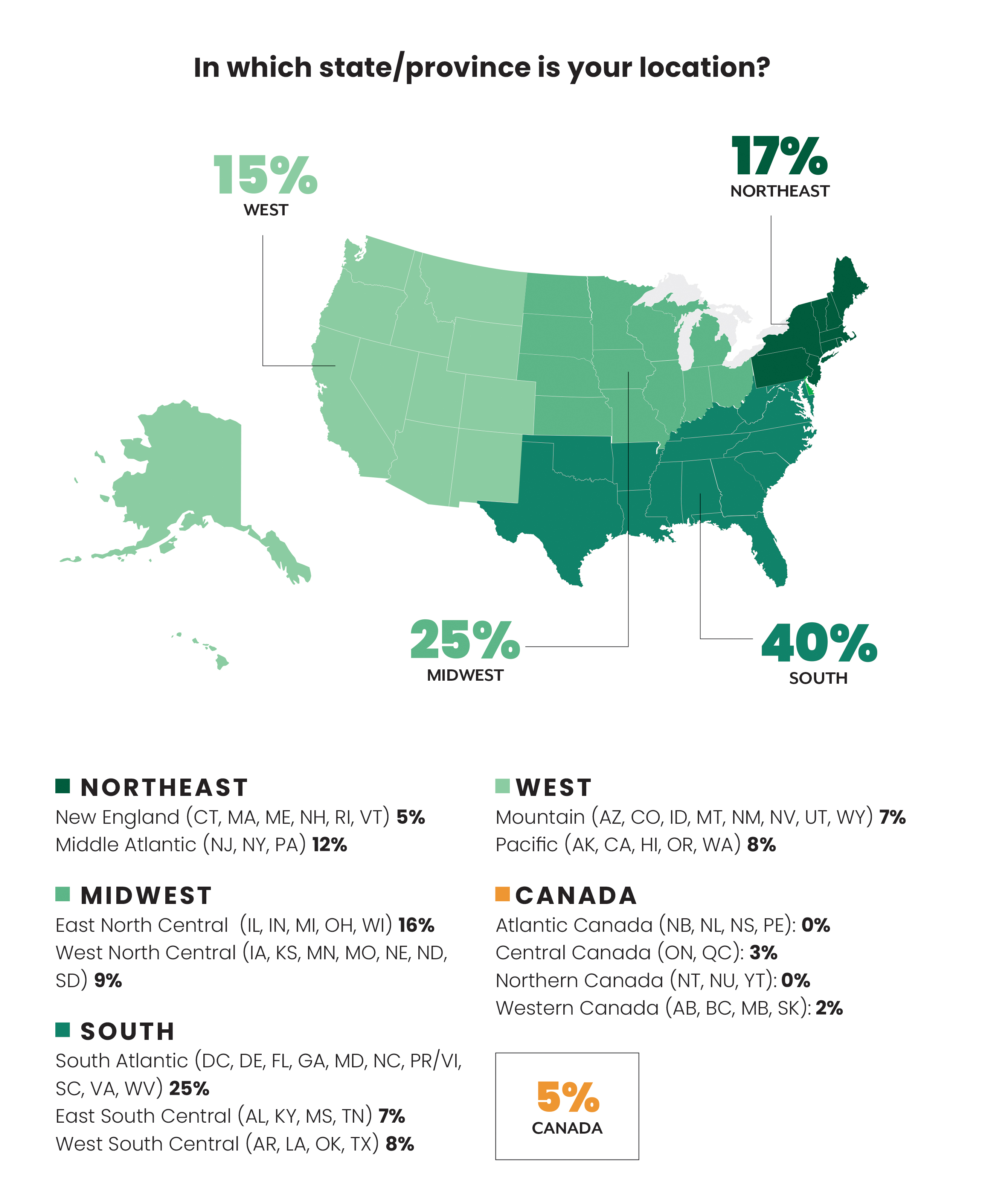
This year’s report shows customer retention is up a tad from an average of 88% in 2024 to 89% in 2025. Wages are also up significantly across the board — something that every business owner we interviewed said their company felt immensely. This could be a contributing factor in company’s average net profit margins dropping down from 19% to 17% in this year’s report.
Price it right
Raising prices incrementally from year to year has become standard practice for most in the green industry.

For Landscape Endeavors, the Colorado Springs organization run by father and son duo Ray and Cory Shorette, that strategy has been working out well. The full-service, commercial landscape business amassed $16.6 million in revenue in 2025 and is projected to reach $20 million this year.
“We do an annual price increase on the maintenance side,” Cory, the vice president, says. “On the installation side it’s job-by-job because we’re always getting real-time pricing from our vendors.”
Brad Terrell, a market founder and ambassador with Landscape Workshop, says the company also does an annual increase in prices based on the Consumer Price Index.

“We use the CPI so that it’s the same (increase) throughout if our prices go up,” he says.
In Myrtle Beach, S.C., Matthew Freedman, president of Beach Landscaping, says an annual increase is commonplace for his commercial contracts and renewals.
“We do a 2.5% increase just to cover inflation and rising costs,” he says.
But on the residential side of the company’s $5 million in revenue, Freedman says it’s a more tailored approach.
“For residential maintenance accounts — we look at it on an account-by-account basis,” he explains. “We analyze how much time we spend there and just make sure that we’re falling within a good range of profitability for each account.”
Holding the line

While most are operating under annual price increases, some landscape contractors are forgoing price increases this season in hopes of boosting customer satisfaction and retention.
Kevin Hord, managing partner with Spectrum Lawn & Tree Care in St. Charles, Mo., says the company hasn’t increased prices in a few years.
“The only time we raise prices is if we’re incurring more costs,” he explains. “There’s no annual price increase because it’s a new year or anything. It’s based on market numbers, product and labor costs.
“We’ve really held steady the past few years,” Hord adds. “Back around 2020-21 we saw a real big spike in seed costs, so we had to raise the price for those services. Since then, we’ve been trying to keep costs in line. We’re not raising prices just because.”
Joe Lattanzio, owner and president of Long Island New York’s Green Grass Guy, shares a similar strategy for his $1 million company.
“We do a pretty extensive job costing report and track all time and materials spent on a property,” he explains. “And then we adjust accordingly. If any specific property is under performing for us, we adjust that pricing. We don’t raise prices across the board annually. We just make really strategic adjustments where needed.”
Lattanzio says this approach has improved customer retention, which is a big bonus for him.
“We’re mindful of the economy all the time,” he says. “We chose not to raise prices this year for any specific client just to retain as many clients as possible. It’s the long-term relationships that are more valuable than the short-term increases at the moment. We felt we could alleviate the pressure and not have someone get a raised bill along the way.”
Handle the truth

Along with helping him determine profitable pricing — John Corona, president of Crown Land Management in Laguna Hills, Calif., says job costing is essential for his $1.5 million business.
“Everything we do gets job-costed, so we know what our margins are on every single project we do,” he says. “Some people don’t want to know what their margins are because it’s too hard to face… they want to remain ignorant… I’d rather have the bad news and live in reality.”
Up in Calgary, Alberta, President of ULS Landscaping’s Western Canada division Ken Ruddock says job costing and knowing your numbers is what has helped the company reach $32 million in revenue (about $23.5 million USD) since it was sold to private equity in 2019.
“We’re pretty robust in our financial reporting,” he says. “Private equity has certainly solidified the way we look at the business.
“We do some pretty robust daily and weekly KPIs,” Ruddock adds. “Team members can monitor them of their own volition.”
In addition to tracking KPIS, the team at ULS is getting an inside look at the company’s financials regularly, as Ruddock sings the praises of open book management.
“We prepare a budget every year, monitor our financials weekly — and we’re pretty open book with our entire team but definitely with our management team and our superintendents,” he says. “We let them know how things are preforming.”
Ruddock says this system was instilled by the company’s previous owners prior to its PE sale.
“We give people the truth. The founding owners of the company started this over 20 years ago… there might be perceptions out there that some of these guys are making all this money of an employee’s hard work… but beyond what you’re paid there’s costs for equipment and costs for insurance and all that…once you lift the veil on that it gives people a better understanding of how things function,” he says. “It’s good for people to understand the health of the business. If there are rumblings out there, and as hard as it may be some time to share the truth of the matter, it’s still better than the rumors and the unknown being out there.”
Ruddock, who’s been with the company for decades, recalls a down time when ULS wasn’t sharing its financials openly and how that did more harm than good.
“We do this primarily through our quarterly address and there was one period of time where we stopped for around 16 months,” he says. “We were more worried about presenting a picture that wasn’t positive, but people would rather know the truth than have to wonder what’s going on.”
When wages go up
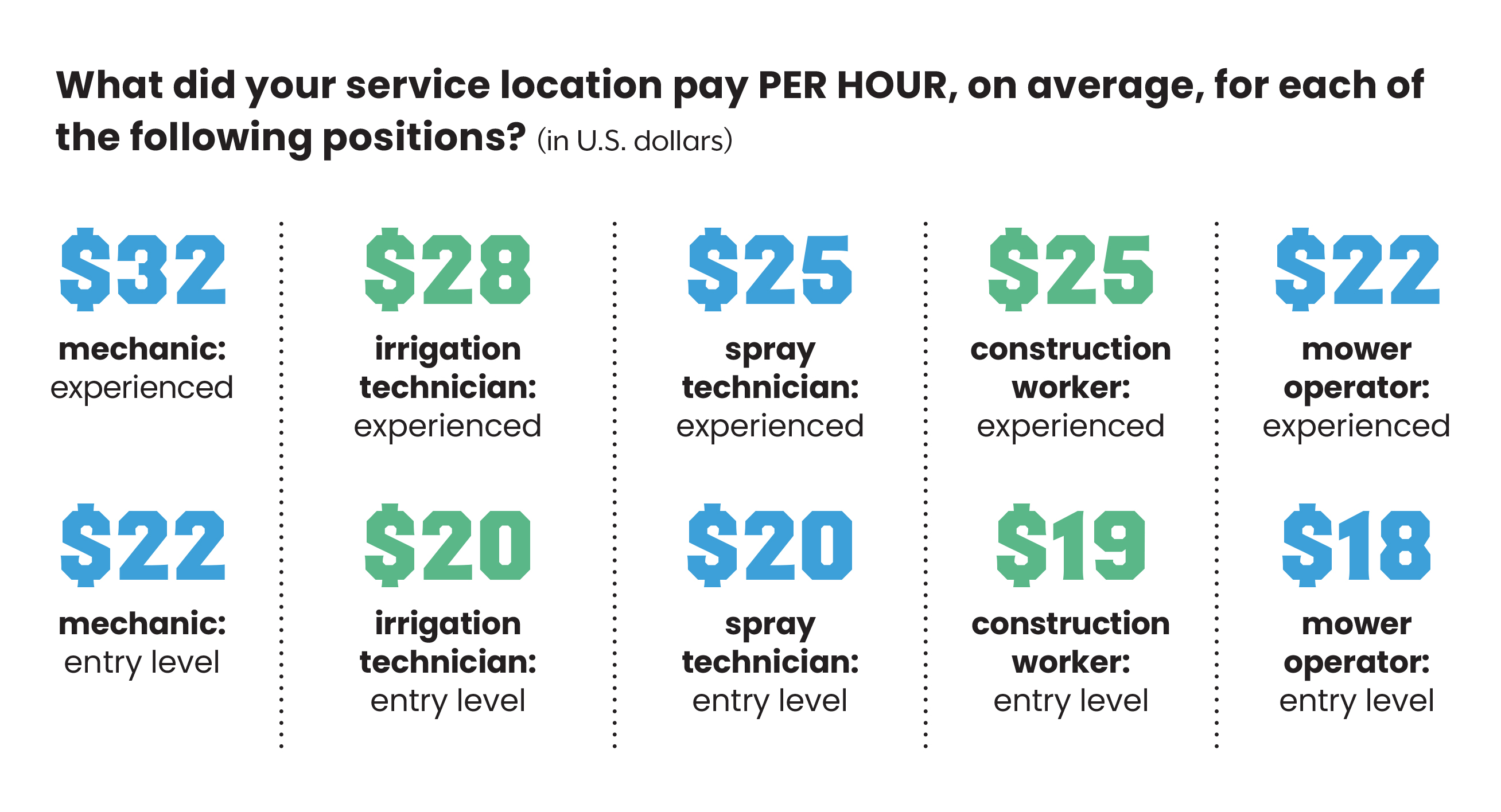
Another fairly universal reason for raising prices year-to-year is to help cover the costs of raising wages. Something all seven business owners we talked to say they deal with annually.
For Freedman, wages get raised during the budgeting process before the season starts.
“We figure wage increases into the budget ahead of time,” he says. “It seems like everyone gets antsy around April as far as wanting pay increases.”
Corona calls wage increases the biggest challenge to his business — adding that his bottom-line would be better if the commercial industry kept pace with what workers are expecting now pay-wise.
“The biggest one has been the wage increases,” he notes. “These guys work really hard, and I’m all for paying them more, but… (the) industry isn’t keeping pace with the rising cost of business. They’re not concerned if they keep pace or not — and with the degree of competition we have, we’ve seen the level of quality decline considerably.
Corona says his pricing strategy is a direct result of labor costs increasing.
“Every time wages go up, we’re raising our prices,” he says. “It’s been hard to grow our business that way because we have competitors who are holding the line on their pricing, and we can’t.”
Hord says his labor costs go up yearly too, but that’s mandated through the H-2B program, which his company utilizes.
“Our wages go up year-to-year,” he explains. “We do utilize H-2B visas and they have a minimum wage requirement that is set by the H-2B system. It’s well above minimum wage — this year I think it’s close to $20 an hour.”
Just like using the CPI to determine price increases, Terrell says incremental wage increases should be expected as well.
“We do annual reviews and most of our employees receive raises in that process,” he says. “We’re trying to pay a little bit more than market just to make sure we keep our good workers.”
Lattanzio adds he does annual cost of living increases for his crews, too.
Ruddock says ULS sets price increases yearly as well, but the focus for ULS is different.
“We set wage scales for each category and class of positions within the business,” he explains. “I’d like to say we’re a little more disciplined in providing performance reviews… we try to base growth within the business on merit more so than just tenure.”
The longtime labor concern
Year after year, labor continues to be an ongoing issue throughout the green industry. Because of that, companies are forced to pay more and think of other creative strategies to entice employees.
“The labor force is always tough,” Hord says. “Everybody thinks they want to work outside until they actually do it.”
Freedman agrees — saying there’s been a lack of quality labor for a long time.
“Labor is always the No. 1 challenge,” he says. “It seems the pull of eligible workers is shrinking over time. It’s getting harder and harder to replace people when you lose them with good, quality people — sure you can find bodies — but people that care and have driver licenses is hard to find.”
For companies like Landscape Endeavors who are focused on finding local labor — it can be even more challenging. Though Ray and Cory add by having a good reputation they’ve been able to pull potential employees from competitors.
“Labor is still the challenge,” Ray says.
“Though we’re getting pretty good transition over to us,” Cory adds of labor from their competition. “There’s more of them coming in then there are of our guys leaving for them. It certainly works in our favor.”
Ruddock is seeing similar things up in Canada — it’s hard to get employees in the door but once they’re onboard, they’re staying put.
“As much as labor is a challenge, we’ve got a good core group of people who’ve been around for a long time,” he says. “They’re sticking around because they’ve had opportunities. They start as a student working in the summer and now, they’ve got homes and families and some of their kids are working for us now during university. They’ve built a good quality of life here.”
Ruddock adds the company’s average tenure is about 10 years.
Corona is in the same camp — he says by treating his employees the way he’d want to be treated it sets him apart from the competition, who’s also looking for the same labor.
“We don’t lose our people — they stay once they come — it’s just getting them to come,” he says. “Some of our competitors are paying higher wages — but they’re not paying employees on days that it rains, they’re not giving them any paid time off… our guys still get paid when it rains and they get vacation time, which nobody else does.”
Benefits, bonuses and other bumps in employee rentention
The most important part of the labor struggle is getting those employees to stick around once they start.
That’s why Landscape Endeavors focuses so much on employee retention.
“We’re offering better benefits — everybody in the company is eligible for an IRA and once they get to a certain point, they’re eligible for insurance benefits as well,” Cory says. “We try to make our benefits package better than the competitors’.”
When small issues come up, like attendance at the crew-level, Ray and Cory say they make sure to reward good behavior rather than always focusing on the bad.
“Attendance is sometimes an issue,” Ray notes. “We’re working on some incentive programs within the crews trying to do some things to incentive them as a crew to show up, be efficient and save on labor hours.”
Offering bonuses has made a big difference for Beach Landscaping, Freedman says.
“We’ve adapted a few things outside of just giving everybody a blanket raise — we’re trying to create opportunities for them to earn more based on performance,” he says. “On the project side, we’ll tell the team supervisor what our allotted budgeted man hours are for a job — their bonus is tied to how they come on that for a job-to-job basis in terms of budgeted hours versus actual hours.
“On the maintenance side, it’s a little harder because services often get combined, so we just expect them to take good care of their equipment, keep their trucks clean — and we’ll give them points for that and for positive reviews. We’d take away points for any negative feedback from the customer,” Freedman adds.
Freedman says the reception has been remarkable.
“We’ve had a great response to it — they care about it and they really work for it,” he says.
With Green Grass Guys, Lattanzio says his guys get paid more if they take the initiative to train and continue their education.
“We tell our guys to go get certified and take classes to further their education to give them raises,” he says. “We’ve also implemented a 401K program that’s been big for our retention and the guys seem to really like that.”
Ruddock says ULS seeks for their employees to grow within the company and strive for promotion, which helps with retention.
“We always look to identify, mentor and grow people within the business,” he says. “Myself and my entire leadership team all started in the field and graduated up through the ranks and into leadership roles. We’re big on promoting from within. There’s a lot of opportunities within the business.”
H-2B headaches
But all of these retention strategies are only worth their salt if companies are actually able to recruit and hire skilled labor.
Some are still having a hard enough time with those steps that they’re participating in the H-2B program to bring in skilled workers from other countries.
However, H-2B happens to bring its own set of concerns, some contractors say.
Hord is one of them — while he utilizes the program to solve his labor challenge, he says being reliant on H-2B and the government creates its own challenge.
“The H-2B system can be a challenge,” he says. “We rely on that… and the lottery system is really tough to deal with. This particular year with the government shut down — it hasn’t helped anything. When the government shuts down there’s no paperwork moving one way or the other. You’ve got to have people able to do their jobs to finalize and authorize things.”
Terrell says tackling H-2B and ensuring his workers showed up on time is in part why he sold his company to Landscape Workship in 2022.
“There’s also constant hassles with H-2B, which we rely heavily on that workforce,” he says. “The main concerns are with the lottery and getting the workers in time. The worse you do in the lottery, you might not get the workers, or the timing may be impacted.
“That’s one reason why I sold — I was tired of that kind of stuff,” Terrell adds. “(Landscape Workshop) does it on a corporate level for 50 branches, and with multiple branches you have a serious advantage just in the way the law works. You have a lot better chance in the lottery — that was a big factor.”
And while plenty of companies are taking advantage of the aid in finding labor, the Shorettes say they’ve made a conscious decision to avoid H-2B.
“We don’t do any H-2B so there’s no wage determination there for us,” Ray adds. “We’re all local labor.”
Real estate woes
Another financial constraint some contractors are facing has to do with available real estate to grow their business.
As real estate everywhere is increasingly more expensive, companies looking to expand their home base are having a tough time finding a suitable place to call home.
That was the case for Landscape Endeavors in 2025.
“This year we expanded our facility, we moved into a new office, and we bought a new property,” Cory says. “We built a shop onto it to help support everybody, so that’s a good feeling.
The company incurred additional expenses by making their new home fit their needs.
“We had to buy what was available and turn it into what we needed it to be,” Cory adds.

For Spectrum Lawn & Tree Care, Hord says he wasn’t looking to expand his shop — but a surprise from his landlord landed him in an unprecedented situation.
“We recently had to move locations,” he says. “We’d been renting a building for just short of 20 years… and this past May I got a 90-day notice from our landlord saying he was selling the building. That was a fun little challenge right around our busiest time of year to have to pack up and move.”
Hord says he’s still trying to work out a long-term solution, but for now the company is getting by just fine.
“We have a temporary space right now for our shop, and we relocated our office back to home,” he says. “You just have to adjust and overcome.”
Staking your claim in your market
Being able to make the most of one’s market is another contributing factor in a company’s success or shortcoming.
Being located in the heart of Southern California, Corona says the competition is fiercer than ever.
“It’s cut-throat,” he says. “It’s probably one of the toughest in the nation…There are some companies that are just not concerned about their long-term reputation, and unfortunately we don’t have a good answer to that.”
That along with clients expecting more but for less money has made it challenging for Crown Land Management as of late.
“We just lost a large customer,” he says. “We were supposed to have actually grown with them, but somebody came in at the eleventh hour and gave them pricing that’s just not practical for us to do business at. But people are willing to do it.
“Even though customers aren’t keeping pace with the cost of doing business, they still want first-class work — they want Disney Land results — and there’s no way you can do it. It’s not even remotely feasible,” Corona adds.

What pricing customers will accept has a lot to do with the local economy up in Alberta, Canada, Ruddock says.
“They call us the Texas of the North,” he says of Alberta. “We’re an energy-driven economy — so we’re always competing against the boom and bust of gas here. A lot of what we do is driven by the numbers, but that always has to be balanced against what the market will bear. We find in our market in Calgary that it varies depending on how things are going in the energy sector. When things are good, we have a bit more flexibility in pricing.”
Freedman says there’s no problem finding work, and pricing it profitably, in Myrtle Beach — as the city is undergoing a sort of renaissance.
“We’re in a special circumstance here in Myrtle Beach — it’s vastly growing and the outlook for anyone in our area is very positive,” he says. “The appetite for the North Easterners to move down here to avoid the cold weather and high taxes is insatiable. They’re coming and coming — and on the development side they’re building and building. There’s no end in sight and we’re really excited about that.”

Landscape Endeavors is seeing similar things out in Colorado — and is making the push to join the booming Denver market.
“We’ve been pretty solid here and the Colorado Springs market is pretty insolated,” Ray says. “We landed a very large construction job in Denver, so we’re starting to move toward the Denver footprint.

“That’ll allow us to create a foothold out there and have the option to create a new branch,” Cory adds.
Additionally, Cory says work in their existing markets is up, too.
“Apartment permits are picking back up…that new school projects and new developments are still happening in town — there’s plenty of activity to support us,” he says.
As a 25-year veteran of the green industry, Lattanzio says he’s usually optimistic about the future for the industry and his New York market.
“We’re in a higher-end marketplace so some clients are able to absorb a price increase more easily,” he says. “But this industry has always been strong and resilient. I’ve seen steady growth year-over-year throughout my career.”
Terrell also harkens to the industry’s strength.
“The industry seems to be resilient,” he says. “We’re optimistic — Landscape Workshop is acquiring a couple companies a month so we’re growing like that and growing organically.”
Forecasting with future technology

With everything from low ball computers to a lack of labor and wage increases forcing his company to work more efficiently, Corona says he’s turning to tech to help him and his crew out.
“We are trying to leverage technology as much as possible to make us as affordable as we can be. I’m doing demos with un-manned lawn mowers to capitalize on productivity,” he says. “We’ve already gone electric on some of our equipment. We’re phasing it in. People will say they want to do their part to be green — but for us it’s a whole different thing. We find the equipment to be a little bit lighter, easy to maintain and quieter.
“With the self-manned mowers, we should be able to hold the pricing with our clientele and use the same labor force to do a better job,” Corona adds. “If we don’t do that — our competition is going to and we’ll lose market share.”
But what does an investment like that cost? And how can one calculate if it’s worth it? Corona says he has a foolproof formula for determining return on investment that he always turns to.
“I’ve always felt it doesn’t matter what equipment costs, but how much it costs to own it,” he says. “Our accountant gave us a formula and says if it doesn’t pay for itself in 18 months, or 24 at the most, it’s not a good investment.”
Corona says his recent electric mower purchase passed the test and is already saving the company time and money.
“They’ve paid for themselves in 12 months,” he says. “There’s been no maintenance costs at all. And we’re saving on what the fuel costs would’ve been.”
For Hord, another thing he looks at when budgeting and planning for the year ahead is how his lawn care company will be utilizing technology to not only be more efficient but to meet customers’ needs as well.
“I think that there’s some fun stuff in the works as far as new fertilizer technology and new equipment technology,” he says. “Electric is coming and I think there’s going to be a big push for organic lawn treatments moving forward.”

While in Missouri, there are no mandates yet for electric equipment, that doesn’t mean Hord wants to sit passively and wait.
“I’ve definitely trying to look into the future more and figure out what people are looking for as far as the way that we service properties,” he says. “I think the opportunity to move into electric power is something that’s starting on the coast and will be moving to the Midwest. We’re working to transition toward that type of service availability.”
Reeling from regulations
Depending on what region or state a business is in can also come with a number of challenges in terms of governmental regulations and mandates.
Corona says being in California he’s subject to plenty of those. New, and potential, ones from the California Air Resources Board, known as CARB, have him worried.
“Regulations are relatively stressful,” he says. “With the CARB Laws and having to modify your trucks and equipment is rather costly. Plus, you’ve got the DMV fees, the cost of registrations, the cost of fuel — all of that has been difficult. It’s definitely raised costs.”
Corona adds a proposed tax that would impact not only his company but every driver in California — could drastically change the way he does business.
“There’s so many regulations on what we’re doing,” he says. “Our state is looking to impose a $0.15 a mile additional tax on every mile you drive for everyone in California…so for an average family that’s like $4,000 a year just to drive their average miles — imagine what that does to a business like ours with a fleet of vehicles? That kind of thing we’ll have to pass upon to our clients.”
He says his home state is trying to make the switch to electric in all aspects of life, even though the technology isn’t quite there.
“They’re trying to get us to go all electric and that’s a really hard pill to swallow for a service company,” he says. “It’s such a huge capital investment.”
For Green Grass Guy up in New York, Lattanzio says regulations on chemical applications, water use and everything else are just the costs of doing business.
“New York is always a challenge with state regulations on our chemical usage… but I’ve been dealing with those for so long…I’m used to it by now. Those are things that just come with the territory of working and living here,” he says. L&L
The author is senior editor with Lawn & Landscape.
More of this year's Benchmarking Your Business numbers

Explore the March 2026 Issue
Check out more from this issue and find your next story to read.
Latest from Lawn & Landscape
- Our March issue is now live
- New Holland Construction's E12D mini excavator
- Caterpillar enhances Cat Rentals for modernized experience
- Work Truck Week's kickoff Green Truck Summit event to rebrand as Future Truck Summit in 2027
- Kubota's SVL110-3 compact track loader
- Green Lawn Fertilizing/Green Pest Solutions donates $100K to Children’s Hospital of Philadelphia
- Bartlett Tree Experts adds Lee Gilman & Associates
- Stay Green acquires JH O'Brien in California