Editor's Note: This article originally appeared in the September 2025 print edition of Lawn & Landscape under the headline “Early to order, early to prepare.”

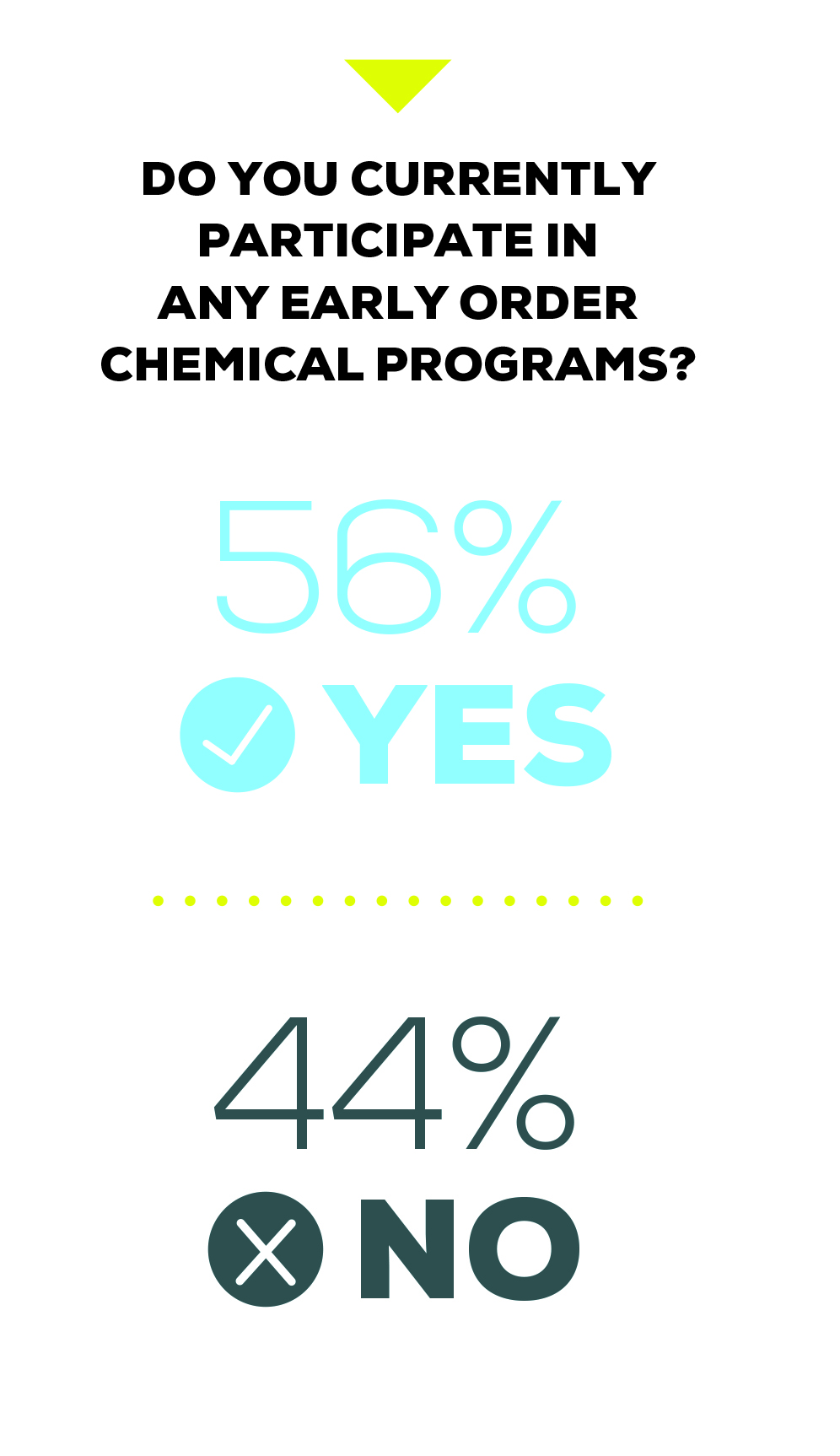
While the early bird gets the worm — the early lawn care company gets the savings when they take advantage of early order programs.
Early order programs, or EOPs, are special discounts manufacturers, or distributors, give out for bulk purchases of products usually in the fall and winter months.
And while most traditionally used in lawn care, some decision-makers are taking advantage of EOPs for everything from chemicals to fertilizers and even irrigation products.
The advantages of EOPs are simple — savings. But the challenges include storage, budgeting and knowing when enough is enough.

Photo courtesy of Castle Rock Lawn & Sprinkler
Deliberate deals
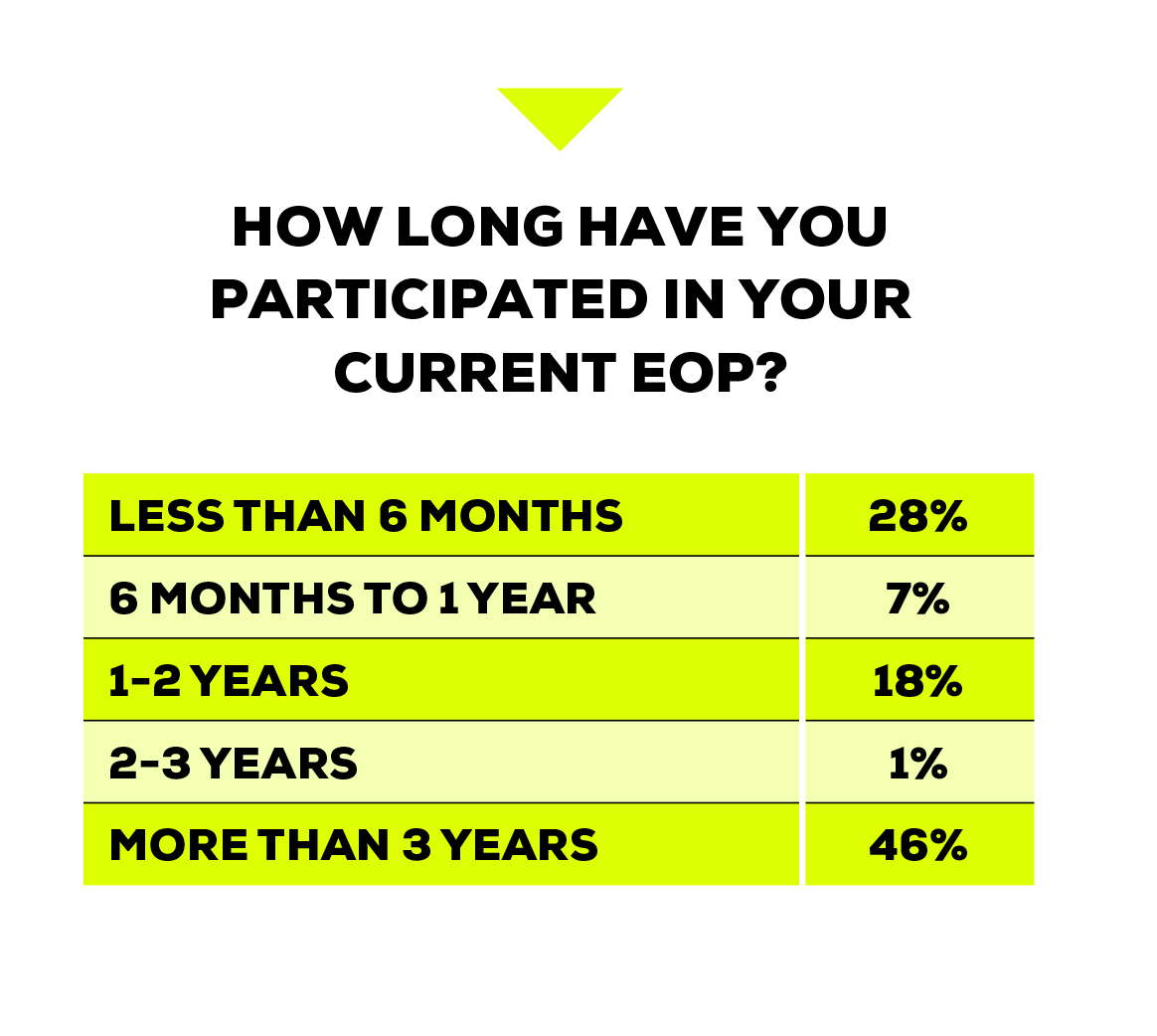
Jesse Smith, owner and president of the family-owned and operated Royal Greens Professional Lawn Care in Frederick, Maryland, says the company has been ordering through EOPs since its inception 29 years ago.
“Back in the day, they weren’t as widely available, though we still tried to take advantage of the ones that we could,” he says.
For John Lane, owner of Castle Rock Lawn & Sprinkler in Colorado, vendor loyalty has played a large role in his EOP purchasing with this company. EOP also worked well at a previous business he owned and sold beforehand.
“I’ve been really loyal to one vendor over the years,” he says. “I buy everything from them — all my chemicals and all my sprinkler parts. I’ve done this program with them since I started this new venture 11 years ago.”
Carl Douglas, owner of Lantana Lawn Care in Midlothian, Texas, has been using EOPs for the better part of 10 years for his $2.4 million business with 20 employees.
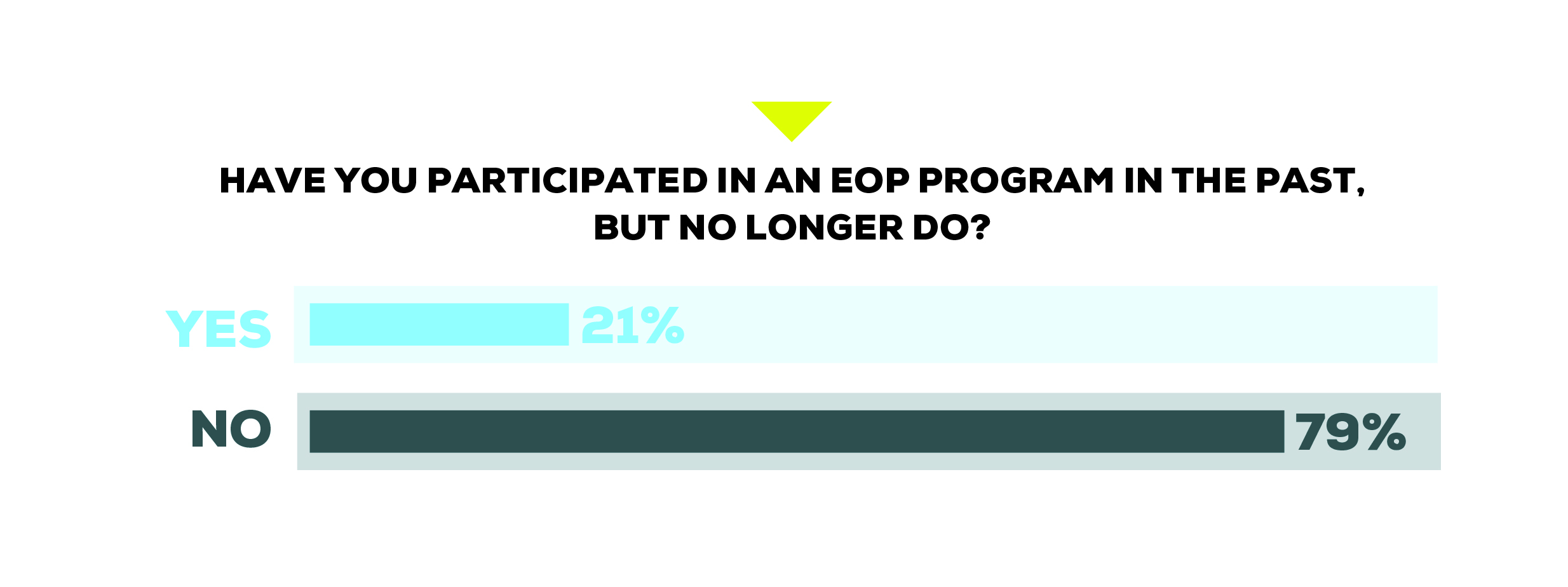
“Discounts are the draw to an early order program. Some suppliers also offer special terms as well,” Douglas says.
Lane says his dealer offers terms that delay payment, which is especially convenient for seasonal businesses like his.
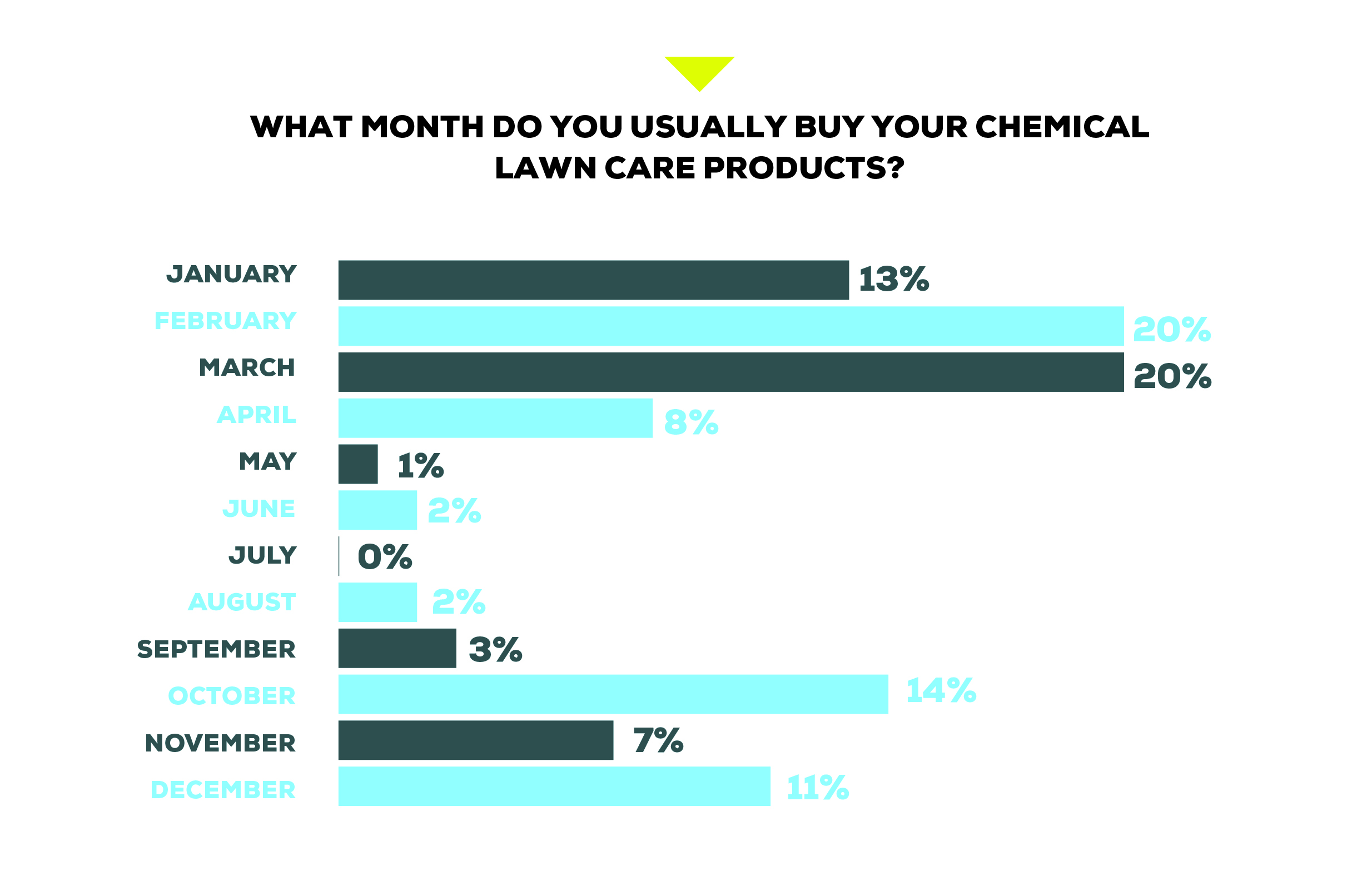
“They like us to have our order in by January,” he says. “Then, what they do is give us 75-days terms from the date of delivery and they give us a 7% discount.
“Obviously, we’re losing money from mid-November until March 1, so in terms of cashflow, there’s none to speak of,” Lane adds. “To get material delivered and not have to pay for it until like May… by that time, cash is flowing and we’re looking good, so it’s not a problem to pay $40,000.”
Lane adds that he amplifies his savings even further because his vendor allows credit card payments for the EOP purchase.
“That’s the biggest advantage to me,” he says of the cost savings. “I get 2- to 3% back for it. So, it’s a good deal for me.”
For Smith and Royal Greens, any extra revenue his $1 million company sees at the end of the year is rolled right into next year’s EOP order for extra savings.
“It also helps us take advantage of if we have a little extra revenue at the end of the year that we need to spend, we can get some incentive for buying the products we’re already going to use and getting them at a discount,” he says. “The money we’re spending at the end of the year just goes further.”
Sharing the savings
While EOPs save the company money, are those savings passed along to the customers? Certain owners say yes, while others say not so much.
“It saves us money; that cost savings is not passed on to the customer though,” Douglas says. “We pride ourselves on our quality of service, not lower pricing. The fact that we take advantage of a cost savings program that not everyone is in the position to utilize puts us at an advantage.”
Lane says it keeps margins even higher.
“We price everything on what we’d normally pay as if there were no discount or no terms,” he explains. “The nice thing about it is, we get a little bit of extra margin off those products. Every little bit helps, obviously.”
However, Smith says EOPs can help lower costs for customers when it comes to some applications — making it more appealing and making the sales easy to come by.
“It helps in some aspects, like when we’re doing specialty applications,” he says of pricing. “The EOPs can help take a little bit of the sting out of some of those products and help us make that price point feel a little better to the customer. There’s no question it’s helpful.
“For specialty weed control, for things like Bermuda grass and stuff like that, if they’re heavily incentivized, it helps us make the cost more manageable to the customer. Those are usually high cost to put out,” Smith adds. “Getting some incentives from not only the manufacturer but the vendor can really help to level out that pricing a little bit. We’ll still be a little higher than what your regular, or normal, application would be — but it doesn’t have to be an extreme price.”
Getting it just right
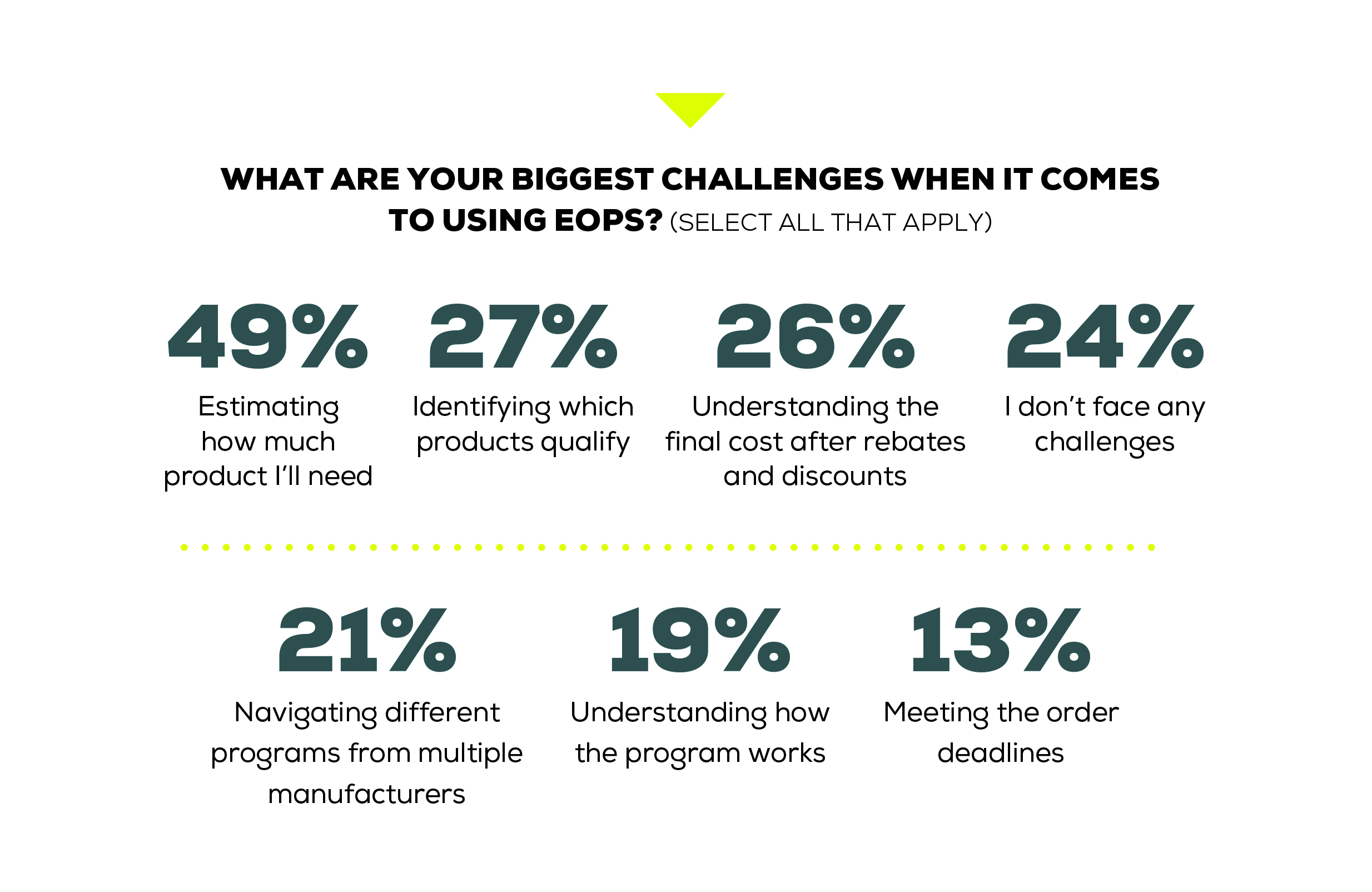
The tricky part of EOP is purchasing.
Lane says he usually uses his busiest time of year, springtime, as his indicator.
“So, last year we ordered around $45,000 worth of materials from them, and I’m guessing we’ll do even more this year,” Lane says. “We sort of base it on what we’ll need for the first couple rounds of chemicals. We bring up our inventory for the spring.
“We maintain an inventory of (irrigation) parts around $140,000 year-round,” he adds. “It really never depletes because we stock it week to week — but in the spring, there is an accelerated need for things like backflows, so we’ll up-order those materials we need for that time of year.”
To figure out the specifics, Lane says the process starts in the fall to order by year’s end.
“At the end of November, we’re going to perform an inventory in our shop,” he says. “We inventory every part in every bin, on every truck, trailer and all the chemicals and everything so we know what we have. Our supplier will run us a report so we can see what we’ve purchased throughout the season.
“We can see the history of those purchases,” he adds. “We’ll look at all that and factor in if we grow this much percent, and then we’ll calculate the range we want to be in and how much of this we want to get and how much of that. It’s a pretty cut-and-dry process for us.”
Smith says years of practice, plus trial and error, have taught him how to order through EOPs most effectively.
“Knowing your numbers and knowing what you need to order is essential,” he says. “It’s very easy with those EOPs to kind of get away from yourself and order way too much product. Try to keep yourself in line with the amount of materials you’ll need for the year. You don’t want to catch yourself ordering like two years’ worth of product in EOP just because you’re getting a good deal. At that point, your savings has kind of gone out the window.”
That’s exactly what happened to Smith a few years ago. He says it threw the budgeting process way off.
“We ended up buying way too much product and it took me like two years to use it all up. But then, when we started having to buy materials again, our accountant was like ‘Your budget went wild,’” Smith adds.
That’s exactly why Lane stands by the old adage “less is more.”
“I guess the question I get is, if we’re getting 75-days terms and 7%, then why don’t we order everything we’ll need for the whole year?” Lane questions. “But I’m not that bold. $40,000 is a big enough invoice. I don’t know if I want to see a $70,000 or $80,000 invoice… but maybe I should.
“We could store it, but I guess it comes down to all things in moderation,” he adds.
Storage strategies
That leads into the next common hinderance of EOPs — storage.
Lane says he’s never had an issue with it though.
“We have the room,” he says of storage. “It’s not a problem for us to put it up.”
Storage isn’t too much of a problem for Douglas in Texas either, though he does note that moving so much product around can cause accidents to happen.
“I have two warehouses that I use as storage for machines, vehicles and trailers as well as materials, but it can get crowded at times, and from time to time, material can get damaged when moving things around,” he says.


Smith says he makes sure to only order things that won’t take up too much space during EOP time.
“Storage is typically not an issue for us,” he says. “We have a fair amount of warehouse space. Typically, with the EOPs, we’re primarily going after just our chemical usage. We’re not going after the fertilizers or stuff like that. Fertilizers are usually what’s going to take up the most room in our shop. We still buy those by the round and as needed.”
Smith says that’s the nice thing about EOPs — you don’t necessarily have to house the product immediately.
“Sometimes those terms are built into the EOP,” he says. “You don’t necessarily have to take them right away. You might be able to not take them until March, but you can order them in November. It’s not always that you’ll order it in November and then it’ll sit in your cold warehouse for five or six months until you start using it.
“A lot of that stuff depends on the vendor as well,” Smith adds.

Explore the September 2025 Issue
Check out more from this issue and find your next story to read.