Lynch Landscape & Tree Service
Editor's Note: This article originally appeared in the May 2025 print edition of Lawn & Landscape under the headline “Speaking of success.”
Lynch Landscape & Tree Service, based in Sudbury, Mass., has found that confidence improves communication, efficiency, safety, culture and so much more. One thing helping the confidence among the company’s 115 employee staff are free English as a second language classes being offered.
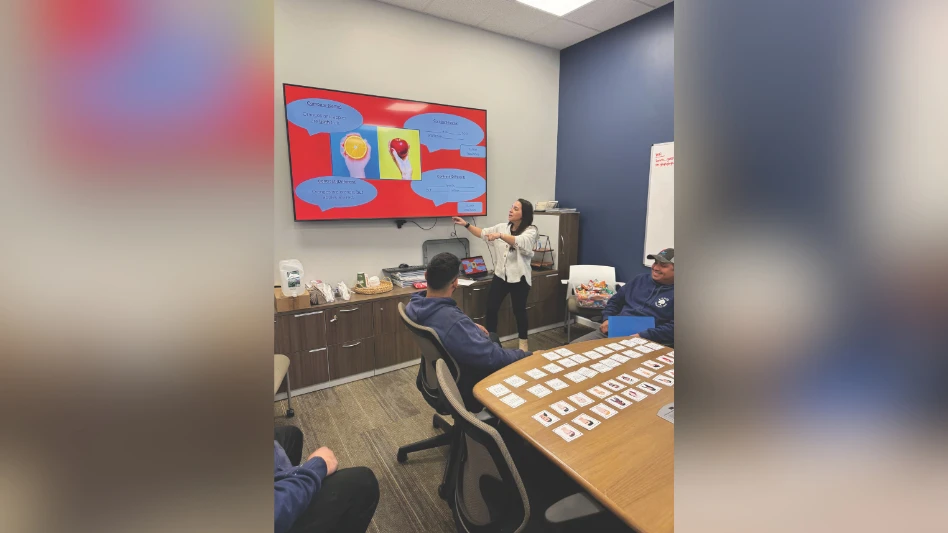
The company launched this new program in 2025 as a way to make the most of the offseason and employees’ downtime.
“It was an opportunity for them to come in over the winter, while it’s slow, and they can really work on this for the next three to four months and then we can really hit the ground running and see improvements whether it’s speaking, listening or reading. It should be a huge benefit come spring,” says Quentin Nowland, Lynch’s general manager.
Nowland explains brainstorming ways to improve company culture ultimately led to the launch of the ESL program.

have taken part in Lynch’s English
as a second language classes.
“In talking with our team about what improvements we can make, and as we moved toward winter, one of the things we were hearing most often was that we have a lot of individuals who speak English fluently and a lot who speak English as a second language, too. So, for them to be able to be articulate, and be in good communication with us and the customers, it seemed like a great way to help them not only professionally but personally as well,” he says.
“We started having these conversations about offering some kind of ESL program at Lynch, and we started with twice a week bringing in someone for an hour and a half each day. After talking with the participants and the team, we decided it made more sense to just do it one day a week. So now it’s one day a week for three hours,” Nowland adds.
David Greene, division manager for Lynch’s tree department, says the program also hails from necessity and a way to increase their primarily Hispanic crews’ reading comprehension.
“We have the work order, and we’d show them the different duties for the day, and something might’ve been missed, and it didn’t take long to realize they couldn’t read English, so they had to remember everything,” Greene says. “Part of this class is also learning how to read. It leans more toward buzz words that we use every day like ‘removal’ or ‘prune.’ It’s working out very, very well.”
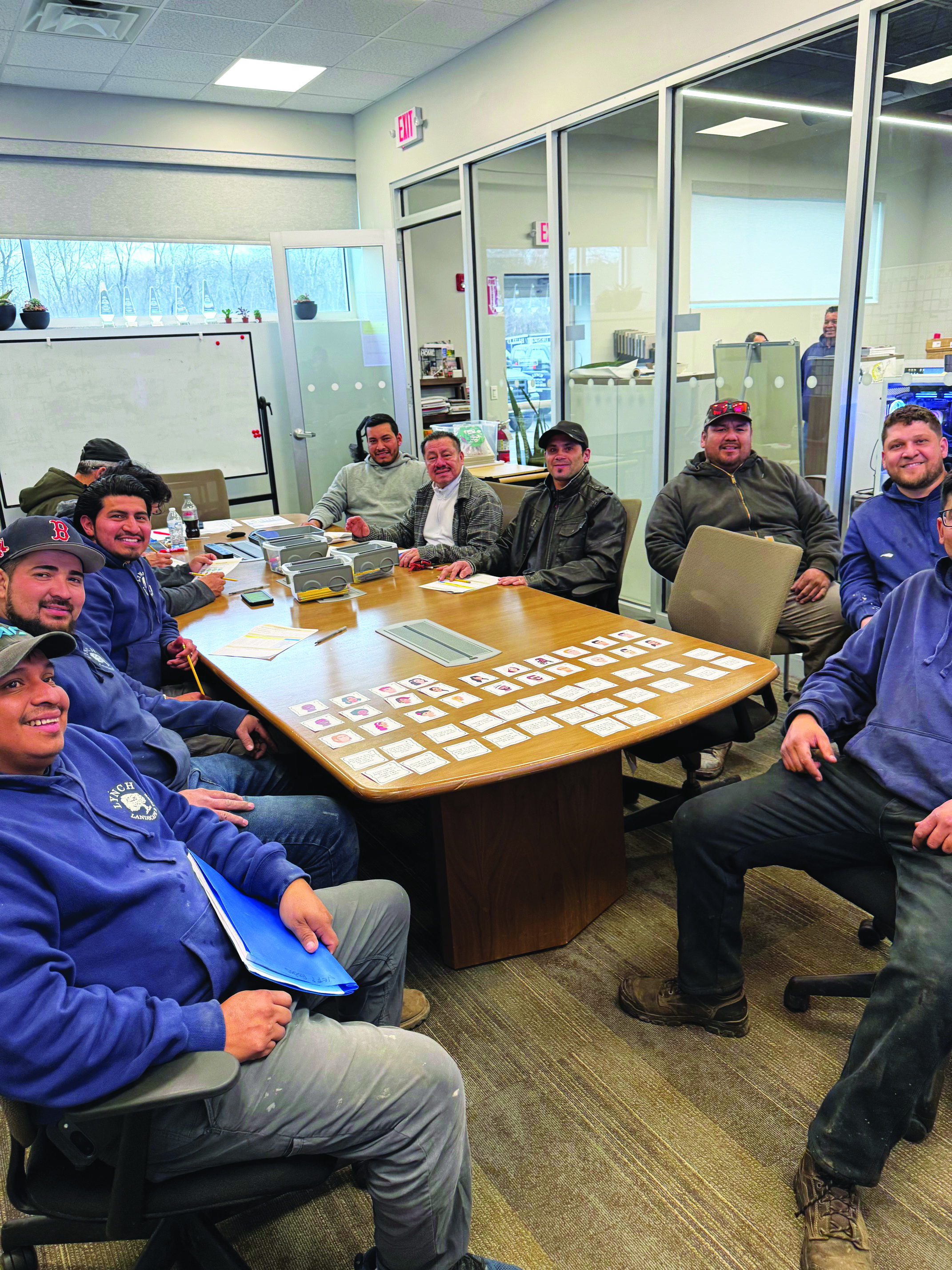
Greene and Nowland know that literacy will only improve their employees’ day-to-day lives on the jobsite and off of it.
“We’ve had a few employees here who speak almost perfect English, and we ask them to take their pesticide license, and they say, ‘Sorry. There’s no way I could pass it because my reading isn’t as strong as my speaking.’ So, there’s really multiple components to this,” Nowland adds.
Thus far, Lynch Landscape has had about 20 team members take part in the program. And after only a few weeks, Greene says he’s already seeing improvements.
“Every couple of days, I’ll ask them how it’s going or ask them to read something, and you can really see how proud they are that they can read it back to me,” Greene adds. “The conversations are (happening) more and more. Some of these guys who used to speak broken English were always hesitant to speak, but now they’re more confident. They’re speaking right up and smiling.”
And the learning doesn’t just end in the classroom. Greene says all the participating students are taking ownership in continuing their education on their own time.

“Our ESL teacher has also set them up with apps on their phones that they use every night,” Greene says. “So, they can keep learning throughout the week, and they have homework assignments as well.”
Greene and Nowland note the ESL program has helped in several facets — including improved jobsite safety, increased productivity, higher employee retention and a stronger team culture.
Though employee retention hasn’t been a problem for Lynch in recent years. The company boasts an impressive 95% retention rate.
“From a retention standpoint, already being at 95%, I do believe this only strengthens our position by offering these added training and educational benefits,” Nowland says. “From a cultural standpoint and a team aspect, to be here and receive a class and training and working amongst guys from different divisions and different departments on this goal has been great. Because they know them, we do a good job of company outings and all that — but this gives them three hours a week to spend with someone from irrigation, or someone from landscaping, and really get to know them. It’s building a stronger team and community for us.”
And Greene says his crews love the program and look forward to it each week.
“Tuesday is our night for the classes,” he says. “Two or three guys this morning, as I was giving them their jobs, were reminding me, ‘Don’t forget we have English class tonight.’ They don’t want to be late for it. They’re really enjoying it.”
Eventually, when the time comes, Lynch hopes to expand the program in a number of ways.

The first being a chance to offer Spanish classes to its managerial and office staff.
“We’ve had some of those discussions. I think we have to see how this goes first, and we want to go one step at a time,” Nowland says. “We want to make sure we’re not taking on too much and that this program goes really well. As this year develops, we’ll be having more of those conversations come summertime and seeing what our options are there.
“We do have quite a few managers that are bilingual and even trilingual, who understand Spanish and Portuguese, but it’s about brining those others up,” he adds. “It’s definitely something we’re considering.”
Nowland notes the company would also like to formalize the ESL program a little more and add some “pomp and circumstance” for those who complete it.
“I’d like to put a standard process in place for graduation and have a ceremony,” he says. “Right now, we have about 20 in the group, but they’re broken into subgroups as some are more advanced than others. The idea is that some of those more fluent individuals will graduate out and then we’ll bring in a new group of five. We’ll always be rotating out as they graduate through the program.”
While starting this ESL program has come with a high price tag, Nowland and Greene say it’s been worth the investment and encourage more companies in the industry to start offering similar opportunities.
They add that outside of finding funding, the other primary challenge can be finding an appropriate teacher to lead the classes. Lynch’s program is currently taught by a local school principal.
“I think the key is having the right person available to teach,” Greene says. “Finding the space wasn’t that big of a deal. We brought in a few extra chairs and some snacks but it’s really about having the right teacher and the willingness to invest in their future. It’s fairly expensive, but the return has been well worth it.”
“For us, it’s a no-brainer,” Nowland adds. “It’s a service-based business, so everything we do revolves around our people and our team.”

Explore the May 2025 Issue
Check out more from this issue and find your next story to read.
Latest from Lawn & Landscape
- Autonomous Solutions acquires Scythe Robotics
- Our March issue is now live
- New Holland Construction's E12D mini excavator
- Caterpillar enhances Cat Rentals for modernized experience
- Work Truck Week's kickoff Green Truck Summit event to rebrand as Future Truck Summit in 2027
- Kubota's SVL110-3 compact track loader
- Green Lawn Fertilizing/Green Pest Solutions donates $100K to Children’s Hospital of Philadelphia
- Bartlett Tree Experts adds Lee Gilman & Associates