Editor's Note: This article originally appeared in the February 2026 print edition of Lawn & Landscape under the headline “Rent to grow.”

Virtually every landscape company owner dreams of owning a gorgeous fleet of equipment when they first start out. But even when that dream becomes reality, well-established companies still find equipment rentals to be a valuable tool.
While owning provides better control over the equipment, adds equity to the business and will typically cost less over time, rentals provide a cost-effective way to respond to unique client needs that helps drive customer satisfaction and sales growth.
Bigger jobs, bigger equipment
For Fisk Lawnscapes in Colorado Springs, Colo., renting provides a more financially viable means of obtaining high-dollar equipment for larger commercial installation projects.
“Sometimes we need a certain piece of equipment for a few weeks to a few months,” says Jacob Stankich, COO at Fisk Lawnscapes. “We’ve done some larger installation jobs for clients like parks and ranches where we needed some bigger equipment than what we already own. We already own mini-excavators and skid-steers that work well for the majority of our jobs. But for some of these larger jobs, we’ll often want a larger excavator and sometimes even a wheel loader. For us, those types of projects are typically a once-a-year thing, so renting makes a lot of sense.”
What if a once-a-year thing turns into four, five or six times? Stankich takes a close look at his project pipeline early in the year. If there’s a good chance the annual cost of owning a machine will be less than a bunch of rental fees throughout the year, buying the machine is back on the table.
“One thing to remember is that owning a piece of equipment is still not free,” Stankich says. “You still have to maintain it and pay for any needed repairs. You need to insure it. And you also have to think about depreciation. All of that has to be taken into account when looking for that breakeven point. At the same time, the convenience of owning adds some value, too.”
Relying on rentals, especially for lucrative projects, requires good relationships with several area rental centers. That helps ensure equipment availability when you’re going to need it. Stankich takes a several-month view of his upcoming projects, and then takes the necessary steps to reserve the proper equipment at least a month ahead of the project it’ll be needed on.
“Some equipment, like big wheel loaders, can be a challenge to find,” Stankich says. “We’ll often reach out to the dealer for the brand of equipment we’d like to rent. The dealer and manufacturer may offer some rental programs we can take advantage of.”
In addition to larger versions of the equipment they already own, Fisk Lawnscapes likes to rent specialized attachments for skid-steers they own.
“Last year, we rented a vibrating roller for a park project,” Stankich says. “We’ve also rented different types of rakes to help with grading projects, along with big seeders for large renovation jobs. We also offer a hydro-mulching service and need a couple of unique seeding and grading attachments for those jobs. Even though they only cost around $10,000 each, it’s still better for us to rent them if we only need them a few times a year.”
One-off projects for existing clients
Dowco Enterprises in Chesterfield, Mo., is a maintenance-intensive company offering mowing, fertilization, tree and shrub care, etc. Due to the recurring nature of those services, nearly all of the company’s equipment is owned because it is used so frequently.
“We spent less than $2,000 on equipment rentals in 2025,” says Donna Delaney, owner and president of Dowco Enterprises. “That was double what we spent in 2024, even though it’s still a relatively small amount.”
Dowco’s rentals come into play on unique, infrequent jobs that require specialized equipment.
“Just because you don’t own a piece of equipment doesn’t mean you have to turn down a job where you might need it,” Delaney says. “If all it takes is to rent something, why wouldn’t you?”
That’s why Dowco routinely rents things like sod cutters and trenchers. That type of specialized equipment is needed on one-off projects their existing maintenance clients ask them to do, like shrub replacements, landscape bed creation and lawn renovation.
“When we do need to rent a piece of equipment, it’s typically just for a few days,” Delaney says. “Last year we rented a mini skid-steer and a soil conditioner attachment for a large sod job. Our employees loved that soil conditioner so much that they almost begged me to buy one.”
Buying every cool new tool that comes along can be a death trap for a landscape company, however. Delaney has developed a formula to help guide her decision-making.
“When deciding if we should buy or rent, we always think about how often will we use the equipment over the course of a year,” Delaney says. “We also evaluate how intensive the maintenance will be and if we have room to store it. Finally, we analyze if the equipment will be able to pay for itself within three years if we go ahead and buy it.
“We’d rather not spend all that money on equipment that’s going to sit in storage most of the time,” Delaney continues.

“Ideally, an owned piece of equipment will be utilized 60- to 70% of the year. On the other hand, if we’re going to rent something four times in a year, simply buying that equipment starts to make more sense.”
Over in Florida, Shawn Logan abides by an even lower threshold.
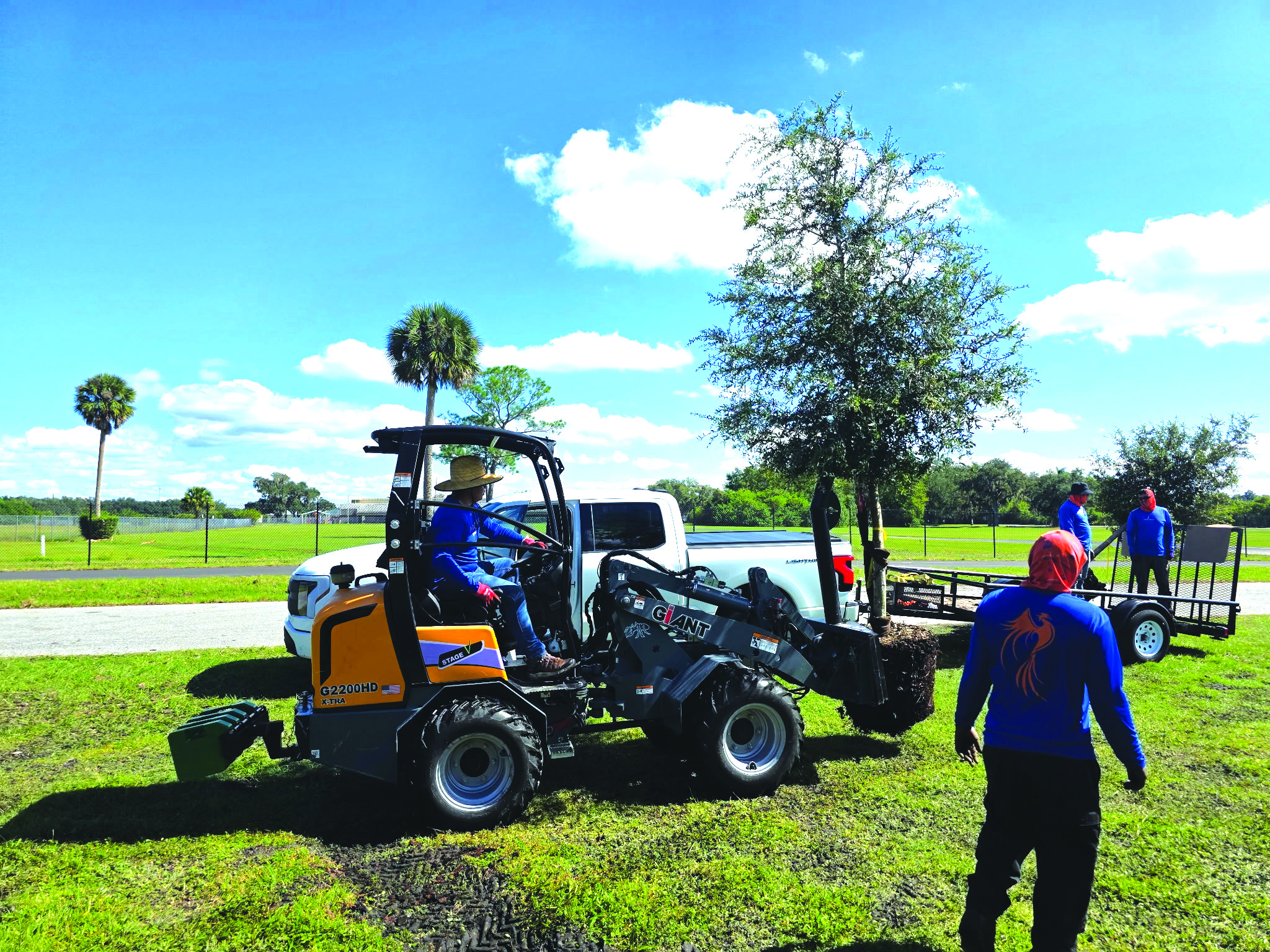
“If we’re going to use a piece of equipment more than once, I like to buy it,” says Logan, president of Phoenix Landscape Solutions in Orlando, Fla.
“A lot of our revenue sources are recurring. If we do a paver job for one of the resorts we service, it always seems to lead to additional paver jobs with them. And it’s the same thing with concrete work.” Thus, Logan likes to go ahead and buy any needed equipment, so he’s equipped and ready to go when the subsequent jobs start rolling in. There is always enough work right around the corner to justify purchasing a piece of equipment — even bigger iron like skid-steers.
“When you service these big commercial accounts, you need to have a certain level of capability,” Logan says.
“These clients aren’t interested in “Joe Schmoe” with a couple of pickup trucks. They want someone who is capable of handling the entire book of business if asked. That’s why we like to own almost all of the equipment we use.”
There is one exception. “We have one property that has a half-acre of Bermuda grass,” Logan says.
“We need to aerate that turf twice a year. In a situation like this, it doesn’t make sense to buy a $10,000 aerator when I can rent one for $100 twice a year.”
A compressed service window
Up in New Jersey, Dave Warrick Jr. also leverages rental equipment to punch through his aeration accounts.
He has a lot more than one account, though. In fact, his company, The Lawn Officers in Hamilton Township, N.J., has so many accounts that Warrick could justify the purchase of two more machines. He still prefers to rent.
“We start doing a lot of lawn renovations in September, and we have to get a lot done in a short amount of time, Warrick says. “The service window is anywhere from three to five weeks.”
Warrick typically likes to own one or two machines, which aren’t enough to get through all of their accounts. So at least a month ahead of time, Warrick reaches out to a few area rental houses to make sure he can rent another couple machines for a week in September.
“This allows us to service 2- to 3-million-square-feet of turf, but not take on the additional overhead of having so many machines sitting around 11 months out of the year,” Warrick says. “Storing everything can be a headache because we don’t have a ton of space.”
The Lawn Officers currently owns one walk-behind aerator. Last fall they rented another one, along with a stand-on aerator. They also rented two renovators for a week, which Warrick describes as souped-up slice seeders. One of those machines experienced a mechanical failure, and Warrick was relieved he didn’t have to figure out how to fix it.
“We called the rental house and they had it all fixed in an hour, at no extra cost to us,” Warrick says. “It’s nice to not have that worry when delivering a seasonal service. Whenever you grab something out of the garage after it’s been sitting for months, something always seems to go wrong.”
And that’s just one more reason why equipment rental is a valuable tool for even the most well-established landscape companies.

Explore the February 2026 Issue
Check out more from this issue and find your next story to read.
Latest from Lawn & Landscape
- New Holland adds E25X electric mini excavator, C314X electric mini track loader,
- Takeuchi adds Admar Construction Equipment & Supplies as dealer
- RC Mowers adds 3 new dealers
- Let the games begin
- Rotary expands lineup of tree care products
- Heritage Landscape Supply Group adds Nebraska's Heritage Nursery
- OTR rolls out TrackBoss E5 tread
- Shouting for North Dakota State