Your next employee might be in a classroom this fall. Here's what they're learning and how.
Class is back in session
As labor continues to be every landscape company’s biggest challenge, and many long-time employees are aging and nearing retirement, businesses are forced to find their next generation of workers.
Those workers can be found in classrooms this fall as students in horticulture programs not only at the college level, but in high schools around the country as well.
Lawn & Landscape spent this summer talking with passionate teachers and energized students alike, asking questions about the state of horticulture programs across the United States. Our September issue cover story focused on this very topic, but our coverage doesn't end on those pages.
In fact, we spent lots of time learning, too: learning about two- versus four-year degrees, how high schools are incorporating horticulture, and how companies can invest time in local education.
Pencils up and notebooks out, everyone — class is back in session.
Our September cover story
Senior Editor Kim Lux interviewed several educators focused on leaving their marks on the green industry from the classroom. Among those included Marcus Duck, an academic specialist with Michigan State's department of horticulture.
Duck, alongside Cuyahoga Community College's Jim Funai and Lori Zatroch, told Lawn & Landscape how the demographics are changing in their respective student groups. However, Duck says it’s all about finding those diamonds in the rough — students with a love of plants and the great outdoors who might not know what a career in the green industry can flourish into.
“The students I’ve seen that are the most successful have that passion and that love of plants,” he says. “The biggest hurdle I’ve seen with recruitment over the years is that you can’t force that. It’s about trying to find the students with that spark and maybe don’t know it.
Changing demographics
With the labor shortage, some might assume horticulture programs are declining — but that’s not necessarily the case everywhere.
“From targeted community outreach and on-campus engagement to well-designed program websites, institutions that have implemented intentional enrollment strategies are experiencing notable growth,” says Jenn Myers, the senior director of workforce development for the National Association of Landscape Professionals. “In 2024, one program welcomed its largest freshman class in 15 years, while another reported a more than 200% increase in enrollment over the past five years.”
Not only are the populations of some increasing rapidly, but there’s also been a notable change in the student demographics lately.
Leading the Tri-C program
"A constant effort"
Experience behind the teacher's desk
From board rooms to classrooms
All about enrollment
A strong mission statement
Tri-C in Ohio
“We’re a steadily growing program, in terms of headcount, in a time where all college programs, not just horticulture, are experiencing decline. Our program has grown by 35% since 2018,” says Zatroch, the plant science and landscape technology program director for Cuyahoga Community College in Cleveland, Ohio.
Funai, professor at Cuyahoga Community College, and Lori Zatroch, the college’s plant science and landscape technology program director.
“When I first started in this role, the majority of our enrollment in this program were white males from more of our rural counties...For the most part, they were already working in the industry or had a family member in the industry. In the last three to five years, we’ve seen a real shift in our demographics. Now, we’re predominately female and two-thirds of our enrollment is female.”
Zatroch and Jim Funai, professor at Cuyahoga Community College, note that it’s not just students fresh out of high school that they’re teaching these days. More often than not, it’s someone who has been out in the workforce already and is desperate for a career change.
What are educators teaching horticulture students today?
For Funai, it’s so important for horticulture programs to stay engaged with the industry so they can bring companies the next generation of standout employees.
“We work tirelessly in our program to stay connected to the industry and work with them, so we are hyper aware of exactly what they need out of a graduate and out of their workforce,” he says. “It can impact a graduates’ potential if they are not as interwoven into the industry on a day-to-day basis.”
Duck, too, says MSU’s program is constantly evolving to keep up with the industry’s demand.
“Over the 23 years I’ve been in this position, the programs appear relatively the same, but we’re constantly updating course content with industry trends… The fundamentals are there — the students need to learn their plants, bugs and soils — but we’re staying in touch with current things that are going on,” he says.
Funai and Zatroch say the best thing about getting a degree in horticulture before entering the industry is having that background knowledge and experience that years in the field can give you.
“Lori coined the phrase, ‘We give you the best trainee you’ll ever have,’” Funai says. “You’re still going to have to train them and get them to know your specific culture and skillset — but they will come in with a whole package of skills that you don’t just learn on your own. It’s not just about a bunch of book knowledge.
“One of the biggest things we focus on is getting them to a point where they can solve problems in the context of the industry,” he adds. “We only get them for two years and X amount of hours. So, we can’t teach them everything and every skill. They’ll get an introduction into everything, but we really focus on the ability to solve problems and work as a team.”
Zatroch adds its beneficial for students to have the time to succeed — and fail — without any consequences or fear of being fired.
“I always joke that the best thing we do is give students two years to make mistakes and figure themselves out,” she says. “They are able to do that in a really safe space. That’s especially important for students new to this industry. They’re in a classroom and if they mess something up, it’s not affecting the bottom line.”
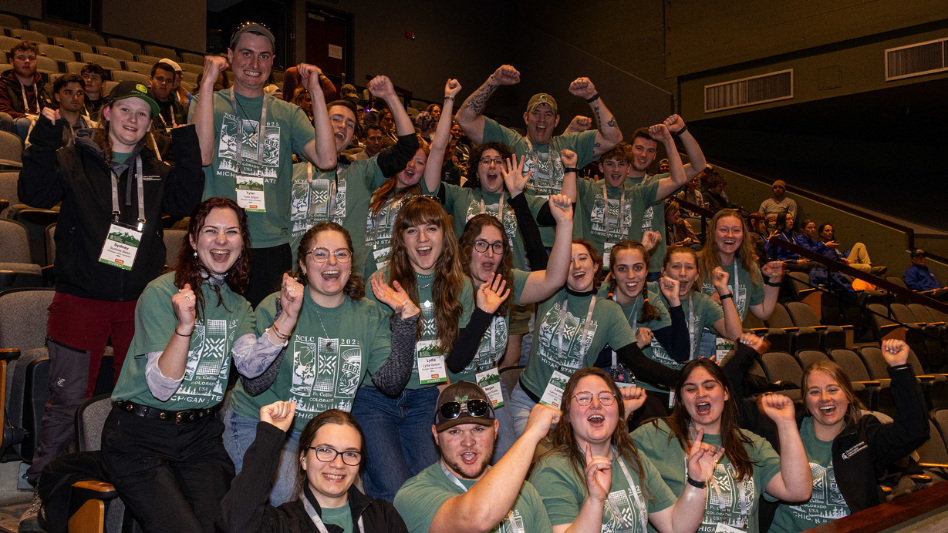
Michigan State University students at NCLC in 2025. Photo courtesy of NALP.
"Should I get a two-year or four-year horticulture degree?"
It's an age-old question for students interested in a green industry career.
Marcus Duck, an academic specialist with Michigan State University’s department of horticulture, says at his school the main difference between the programs is the brevity of the coursework.
“The two-year program is the nuts and bolts of horticulture,” he says. “The four-year bachelor’s degree gets into the chemistry, the genetics and higher levels of plant functions.”
As an educator, Duck says he doesn’t like to promote one program over the other — but both have their advantages.
“There’s been a lot of really cool, fun events that our students have been able to be a part of,” he says of the last nearly 10 years. “We had two students as part of the all-female grounds crew for the softball Little League World Series. That was not something I had on my bingo card when I started this position, but it’s moments like that where I can see my students thrive in a professional setting and learn from industry professionals.”
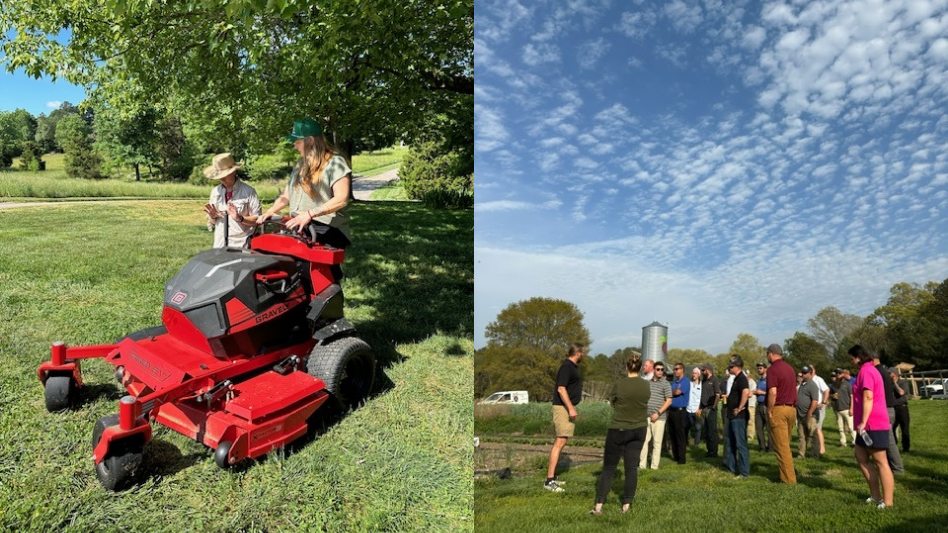
Bland Landscaping hosts students on field trips at one of its properties, Burkett Farm, to teach them about horticulture.
What can landscaping companies do to promote education at their local schools?
Maybe take a page out of Bland Landscaping's book.
It all starts with a property the company maintains, which Kurt Bland, Bland Landscaping’s president, thinks is truly unique.
“We operate a teaching farm for one of our customers who is a philanthropist,” Bland notes. “He provides us with the land and the resources to operate this teaching farm. At the teaching farm, we bring in students throughout the year to expose them to horticulture and agriculture. We bring in 40 to 50 classroom groups per year.”
The area is called Burkett Farm and Bland says his business has been involved with it for over a decade now.