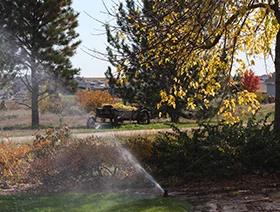
There’s a lot of work that goes into making a water management plan: analyzing soil, researching evapotranspiration rates, gathering data on sun exposure and more. But all of the work is well worthwhile, especially as the demand for water continues to rise.
“There are a lot of advantages to having one,” says Douglas Macdonald, principal of Aqua Engineering in Fort Collins, Colo. and past president of the American Society of Irrigation Consultants. “First, you’re planning a strategy for maximizing the efficiency of your water usage, and water is clearly a declining resource and will become even more valuable in the future. So if you establish a water management plan now, you are prepared in advance of situations that may come up like drought restrictions. You’re also being a good steward of a very valuable resource.”
That valuable resource can be expensive, too, especially in drought-stricken areas. If you project that you need more water than you really do, or need to find supplemental sources of water, you’re throwing money down the drain. “When water is brought to a new housing project or a growing city, a lot of times that water is transferred out of agriculture and so some pretty high prices are being paid for this water that’s transferred over to municipal use,” says Stephen Smith of Regenesis Management Group and past president of the ASIC. “You just can’t afford to over-project how much you need, and if you under-project, or there’s some kind of change, it can really throw a glitch into the amount of water that’s available for the landscape or the golf course.”
To Smith, a water management plan is a “day one, hour one” analysis to avoid potential pitfalls. He gives the example of a housing developer who has a drought-tolerant grass planted, but wants lush, green turf for buyers to see. “Then you immediately have to go back to the water management plan and see if you’ve got enough water in the budget or in the allowance for this project to be able to make that change,” he says. “That’s my point on how that water plan becomes the underpinning for so much and you can’t just change it.”
Macdonald agrees that without a properly researched and executed water management plan, you’re at a severe disadvantage and could end up with large expenses in the future like lost or damaged plant material, municipal or neighborhood citations, or a hit to your reputation.
“If you don’t have [a water management plan], then you’re setting yourself up for failure,” he says. “It’s money and aesthetics and public perception that is likely going to be a negative.
That’s not even to mention the water savings and environmental benefits. By taking a hard look at the site and taking the time to really understand the water needs, irrigation consultants can keep water where it’s needed most and put it to its best use.
Creating a plan can identify not only identify areas where you can potentially cut back on water, it also works as a drought management plan during dry summers. You can prioritize high profile or active areas on a project and focus efforts there.
“In doing that, when you’re doing the irrigation system design, you’re able to identify zones that you can manage in different ways in response to water availability and drought,” Macdonald says.
And by putting the water where it’s going to the best use, you can save on water soluble fertilizers, herbicides and pesticides, keeping them from washing away with runoff. It can also help prevent deep percolation, or water moving below the root zone, which can cause a saline situation in the soil, Smith says.
“To me any irrigation scheduling or improvement in irrigation application efficiency, that translates directly to the environment because the water’s not wasted, but almost more importantly, the water that was maybe previously wasted, if it moves below the root zone, it’s carrying any water soluble chemical with it. So any of that that isn’t in the slow movement back to the river or the nearest drainage, that’s all a very positive environmental effect.”
Photo courtesy of Stephen Smith