Overheard Friday
"We have properties that we mow all day long."
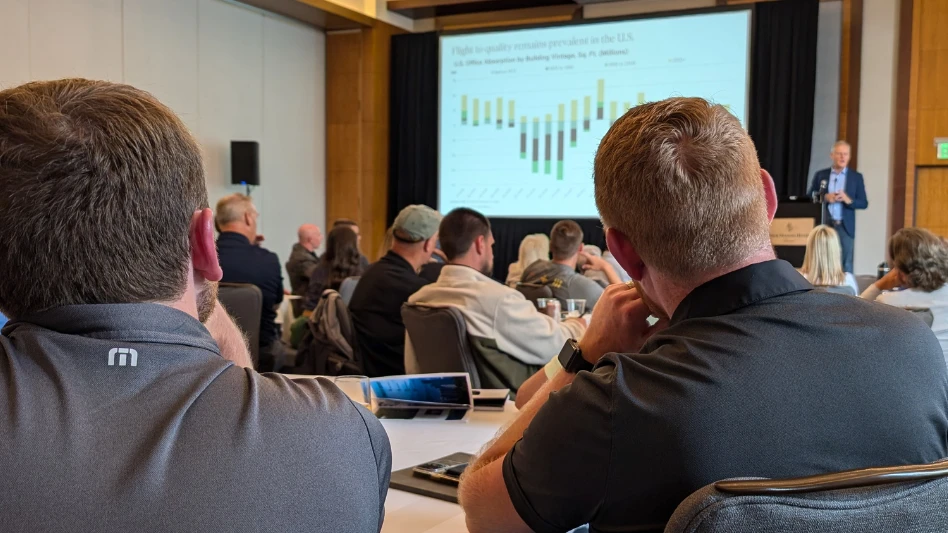
At the final session of the Technology Conference, Steven Schinhofen from Harvest Landscape Enterprises told attendees that his team uses a series of larger, 60-inch mowers without much fuss with the battery run times.
In one of their service areas of Irvine, California, it's required to be all electric. Some variables affect run time like bagging or what type of turf the mower is operating on. "It is challenging, but there are particular models of the larger mowers that give you six to eight hours," Schinhofen says.
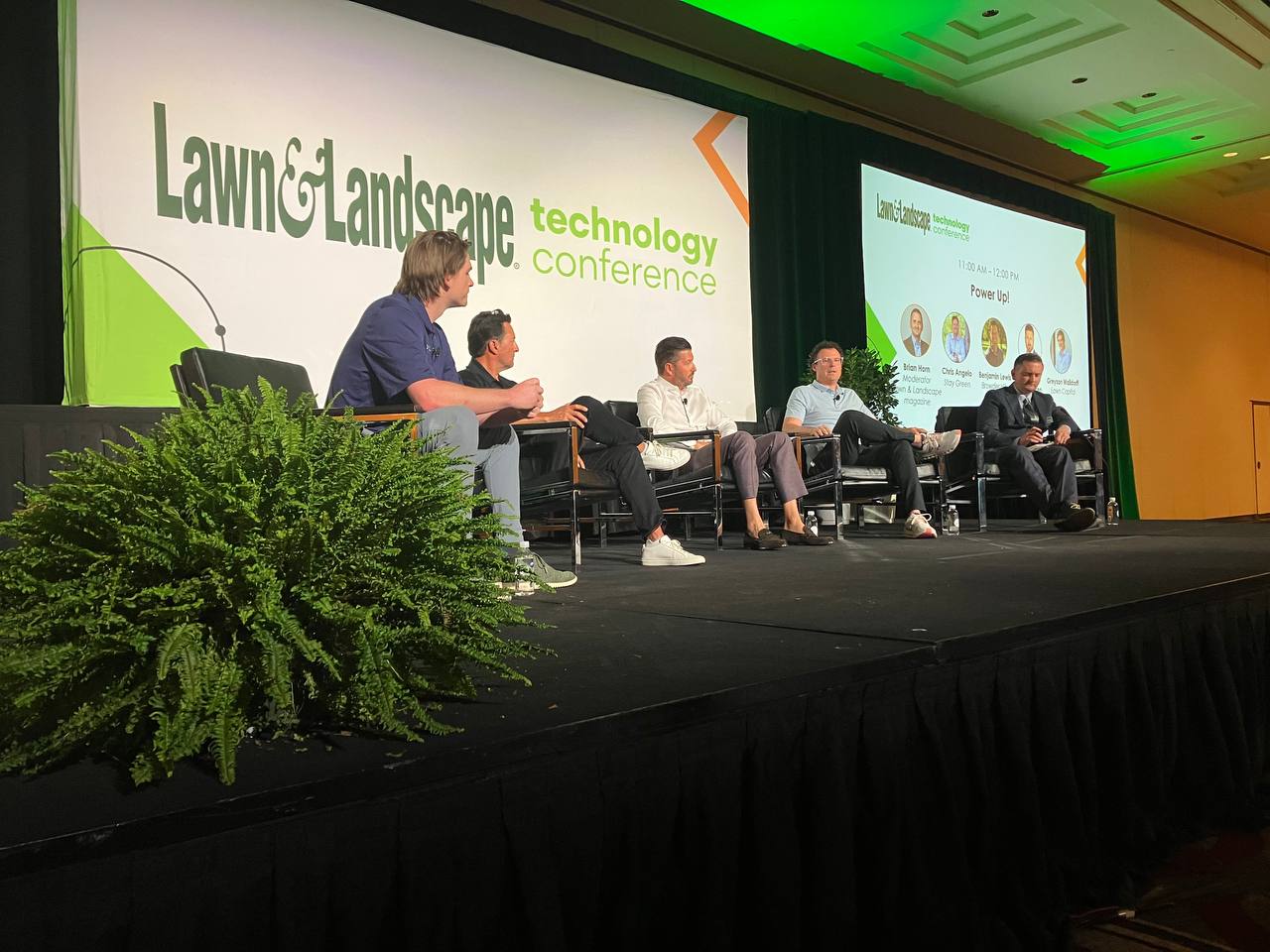
Other panelists on the "Power Up!" panel included Chris Angelo from Stay Green; Benjamin Lewis from Browder Hite; and Greyson Walldorff from Lawn Capital.
"You've got to go out there and get creative," Walldorff says. "Find the right solutions from providers."
“The labor pool is getting younger and younger, and the top level is getting older and older."
That's why technology is so important and finding a champion to push new efforts forward is essential.
LLTC "Behind the Screen" panelists Mizraim Mata, with The Greenery; Mike McCarron, with Image Works Landscape Management; and Loren McIrvin, with Allied Landscape shared their latest tech advancements and how they're getting buy-in.
“Be quick to implement but be slow to train it,” McCarron warns. “You’ll get much more buy-in.”
Overheard Thursday
“We’ve seen this job squeeze for decades for blue-collar jobs. Now we’re seeing a squeeze of knowledge work. These things like AI and ChatGPT are coming for white-collar jobs. Landscaping is in the sweet spot — we are right in the middle.”
While AI isn't going anywhere, and will only continue to advance, LLTC Speaker Derek Kaye, co-founder and CEO of Whispr, says it won't be taking over the industry any time soon.
"Utilize the tools that are going to make you competitive and use the things that will make a difference to your advantage," he says. "Don't forget — we are in charge of the AI and not the other way around. We are in charge of its future."
"Each piece of technology is a leverage point."
John Butler, the commercial division manager at Milosi, told attendees some technologies his company adopted that changed the complexion of the Milosi business.
He encouraged attendees to embrace the uncomfortable truths that technology can outline, such as estimating issues they found at Milosi.
"People don't like risking what's safe," Butler says. "That's human, that's normal, but that's why we as leaders have to give them permission to try."
“You can have all the data in the world but if you’re not setting up systems or frameworks to comprehend it or a culture to use it in a productive way it’s not going to do you any good."
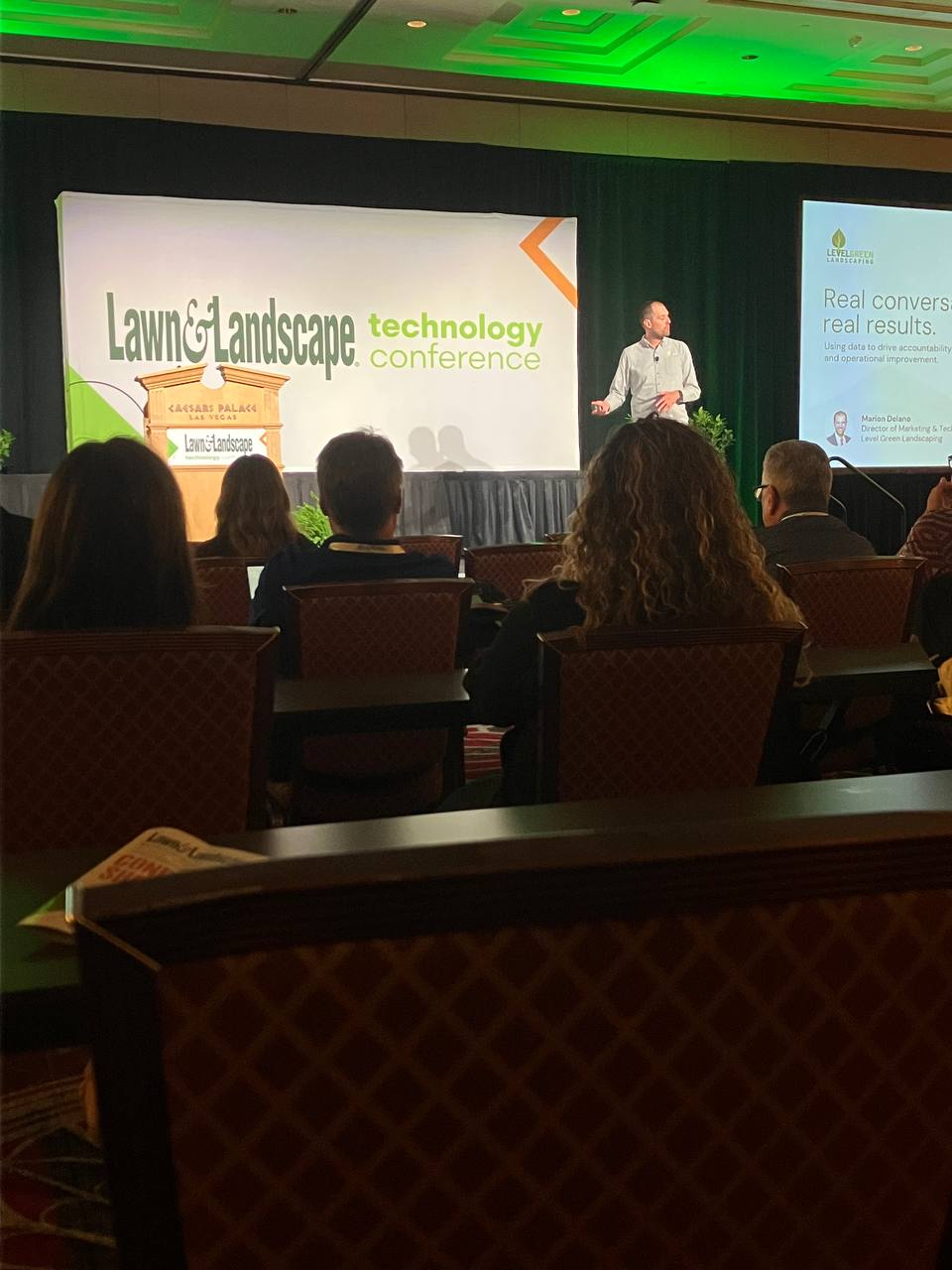
Marion Delano, director of technology and marketing, Level Green Landscaping, made that point in his LLTC session "Real Conversations, Real Results."
Delano is admittedly not a big tech guy but took over the role in his family's business out of necessity.
By embracing software and a few dashboards Delano says the company has seen a lot of success. But that's not to say the journey has been easy.
“It has not been all rosy and I don’t’ want pretend it has,” he says.
Three mistakes Delano and Level Green made that he warned attendees against making were as follows:
1. Rolling out dashboards to crew before having manager buy-in
2. Expecting the tool alone to change behavior
3. Only rewarding top performing crews
"The best designer on earth is earth itself."
Frederico Outdoor Living's Logan Hall walked attendees through ways technology can aid their landscape design mindset, but he started by first telling them to pay attention to their surroundings first.
Hall points to sunflowers, bowerbirds, and even the male white-spotted pufferfish as examples that lean into basic design functions.
"Nature has been solving problems with form, function and beauty long before we ever called this process 'design,'" Hall says.
“You are always competing for price, quality and service. We used to say choose any two. You can get two of these, but something is going to suffer. Those who are early adopters to technology can give all three. They have that advantage over the marketplace."
Peter Guinane, CEO of Oriole Landscaping, shared how he embraces technology and automation to be able to deliver on all three of those things during his session "How to Stay Ahead in a Competitive Industry Through Automation."
One element Guinane suggests no one ever comprise on is price.
“There’s always somebody cheaper. I’ve lost a lot of jobs that way,” he says. “If you want low price you’ll get crappy jobs...There’s no loyalty with low-price customers.”
By focusing on quality and service you are able to collect those high-value, loyal customers who are willing to pay a little more.
He adds he found those customers by building a brand that's synonymous with innovation and superior quality.
Guinane asks attendees to go out there and sample all sorts of technology from industry-specific software to free AI tools like ChatGPT.
“Try new systems,” he says. “Do small, reversible, experiments with this technology… that’s the best way to find the ones that are going to be successful.”
"It's not just about advertising —it's about PSAs."
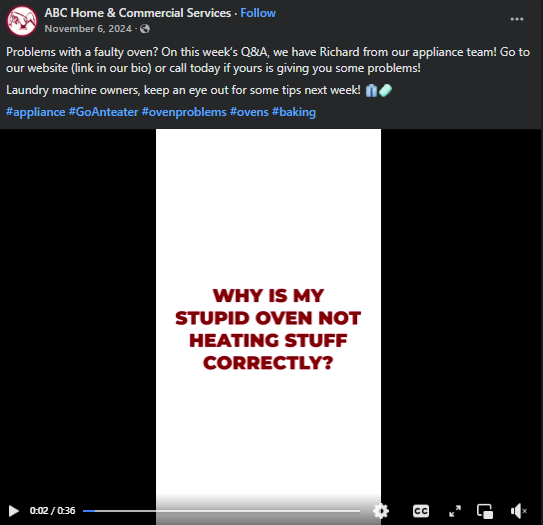
Julie Fredlund and Tresona Dumas told their session attendees how ABC Home & Commercial Services has used social media to customer and employee engagement.
Fredlund emphasized the importance of using social media externally to tell clients about more than just the services they offer. She wants companies to teach their clients about how to troubleshoot issues with their lawns while adding at the bottom of those posts something like, "Need help? Give us a call."
She views that as a win-win. Also a win-win? Inviting customers to join them for fundraising and charity events.
"Getting our customers involved in our work is really big to us," Fredlund says.
“You almost want to think like a child when you experiment with technology. Be okay with getting messy and letting things fall apart because that’s where the learning happens."
Nicole Downer, president of Downer Brothers Landscaping shared the analogy of playing in a sandbox with LLTC attendees during her session "Confessions of a Tech Novice."
Downer shared that while technology can be overwhelming there is plenty of tools out there to help you build, dig and scale.
One of the most useful tools Downer says she uses is one to create AI-generated videos for everything from training to continued education and culture building.
Nowadays at Downer Brothers, Downer says new employees get two welcome videos before they officially start to help them get off on the right foot.
“We wanted to overcome the butterflies of the first day, make a good impression and set a high standard,” she says. “Anytime you come into a new circumstance everyone is a little nervous. Now there’s two welcome videos we send before the first day.”
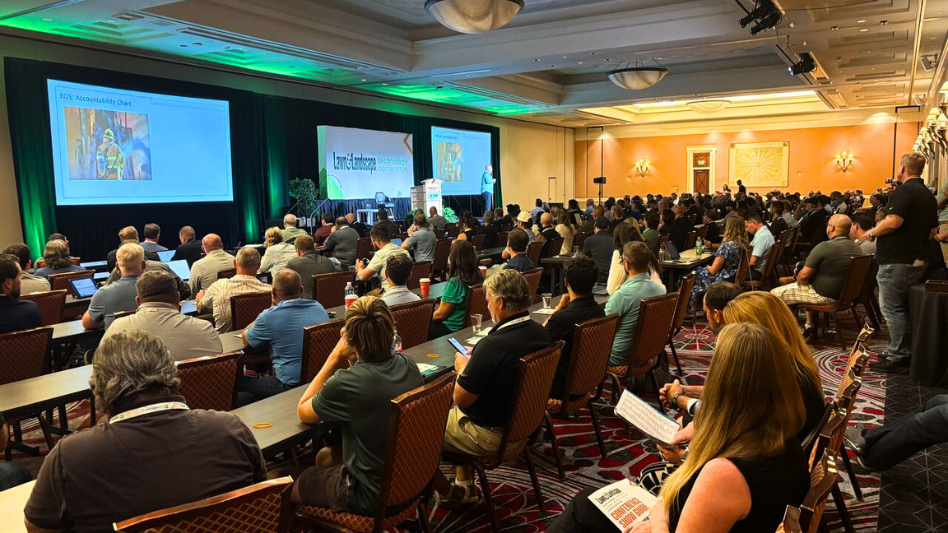
"Our biggest tool for communicating with our customers is site audits."
Benjamin Green, the chief operations officer at Strata Landscape Services, told his session attendees that Strata's currently using technology to improve site audits. These audits help improve client relationships and the technology helps them communicate effectively.
Green says there's lots of inexpensive technology available to aid with this process. But buyer beware: Strata learned the hard way to double-check the tech's phone capabilities.
"You have to make sure that they're enabled for either your phone or your tablet," Green says. "We had to (buy) way more tablets than expected."
Overheard Wednesday
"Technology alone is not enough to thrive in a digital economy."
Keynote speaker Amer Iqbal opened his presentation with a story: He recently saw a group of people huddled together messing with their FitBit watches, tricking the devices into reporting more steps than they actually took.
The reason? Their companies were offering bonuses to walk a certain number of steps.
Ultimately, Iqbal says these well-intentioned company promotions ultimately failed because the technology wasn't actually doing what it was intended to do. In this case, the FitBits weren't keeping the employees any healthier as they were gaming the system; likewise, most landscaping companies are spending more money on technology than they were a decade ago.
Still, they're not leveraging that technology productively.
"Tech spend is high, but most companies in your industry are using 10 to 15% of the technology capabilities that they buy," Iqbal says.
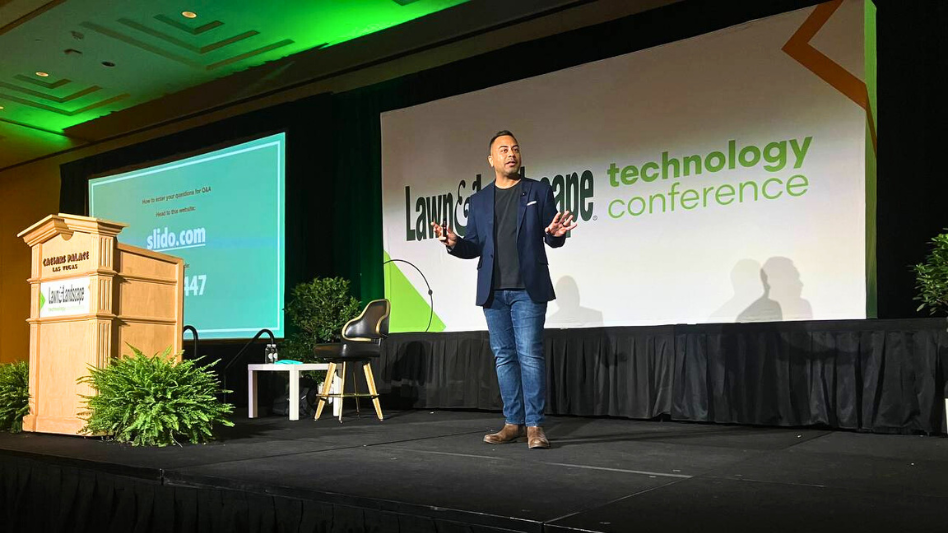
"This saved our business."
At the start of his session, Todd Reinhart from Reinhart Landscaping & Snow walked Lawn & Landscape Technology Conference attendees through his company's history, including a key moment Reinhart says completely changed his company's outlook.
When he hired a consultant to implement the Entrepreneurial Operating System, the consultant offered some tough feedback — the company's main problems started with Todd, not the rest of the team.
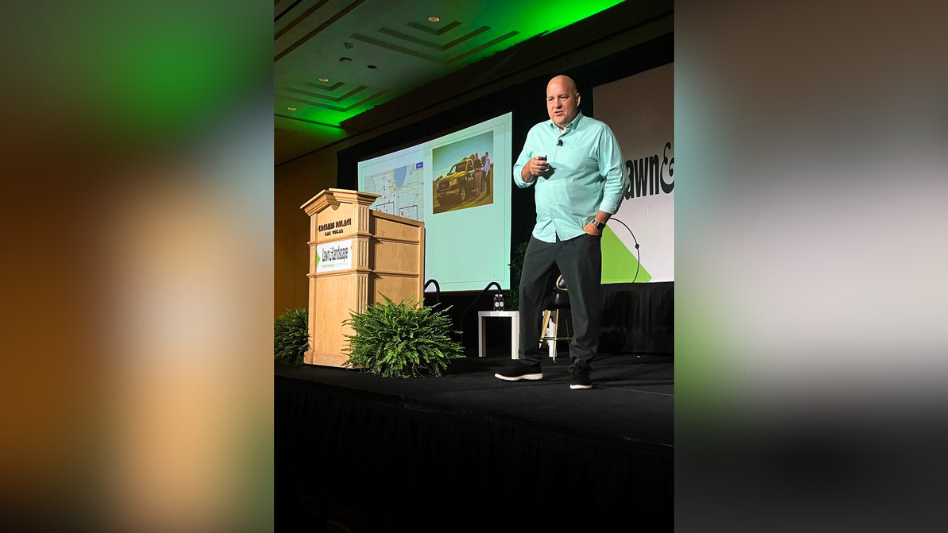
"You're the arsonist," Reinhart remembers being told. "(He told me) 'you haven't put the systems or the processes or empowered the people to solve the problems.'"
Reinhart made significant changes to his company and his approach after that. Now, his company relies so heavily on technology that his employees often joke they're a tech company that works in lawn care, too. Now, Reinhart runs technology to improve operational discipline, offer robotics and electrification, data systems/analytics and using artificial intelligence as an accelerator.
Catch more from the Lawn & Landscape Technology Conference often on this page. And, for more from our trip to Las Vegas, check out our Top 100 coverage.
Latest from Lawn & Landscape
- New Holland Construction's E12D mini excavator
- Caterpillar enhances Cat Rentals for modernized experience
- Work Truck Week's kickoff Green Truck Summit event to rebrand as Future Truck Summit in 2027
- Kubota's SVL110-3 compact track loader
- Green Lawn Fertilizing/Green Pest Solutions donates $100K to Children’s Hospital of Philadelphia
- Bartlett Tree Experts adds Lee Gilman & Associates
- Stay Green acquires JH O'Brien in California
- Loftness names McComas as chief operating officer