Because they use the same tools day after day, most landscape contractors and designers tend to own their equipment. However, there are times when contractors are faced with the decision of whether to rent or buy a new piece of equipment: an unusual job comes their way, a piece of equipment is down for repairs or some other unforeseen circumstance happens that forces the landscaper or contractor to decide between buying and renting.
Weighing your options
To help with the decision, keep these guidelines in mind:
- Frequency of use. It may make sense to rent a tool or piece of equipment you use once or twice a year, especially if it is a big-ticket item. The key to success here is to make sure you don't keep the tool longer than necessary. Many rental agents will charge a day's rental even if the agent is closed for a holiday and you can't return the tool.
- Cost. The attractive thing about renting is that you pay a small fee for the use of an expensive piece of equipment. Some rental agents have daily as well as half-day rental rates. Of course, if you repeatedly rent a piece of equipment, the long-term financial advantage begins to move toward buying. If your rental agent does not offer delivery service, you will also need to factor in the time devoted to picking up and returning the tool you rented.
- Maintenance and storage. If you are not going to use a tool or piece of equipment frequently, do you want to spend the time and money necessary to maintain it properly? The same thinking goes for storage space. It is great to have a backhoe whenever you need one, but do you have the available storage space for the days when you don't need it?
Rental tools for landscaping
Some common tools you may consider renting include:
- Stump grinder. They come in different sizes, so make sure the one you rent can handle the height and diameter of the stump you need to remove. Clear the area around the stump of rocks, and, if possible, cut down the height of the stump using a chain saw. It will make removal go much faster.
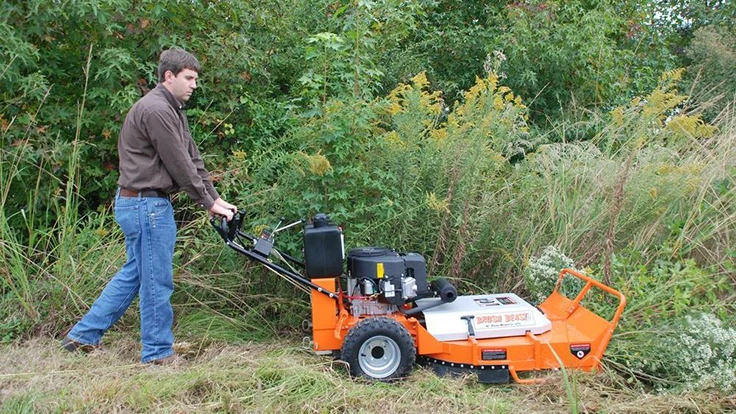
- Brush mower. When you occasionally need to clear a meadow or just an overgrown property, replace your standard mowers with a brush mower. Both walk-behind and towable models are available. Some walk-behind models can handle inclines and whack down tall grasses and even saplings that are up to two inches in diameter.
Rental tools for hardscaping
There are a number of trends in hardscaping that participants at the Midwest Green Industry Xperience held in Columbus, Ohio, mentioned. These included outdoor kitchens, pondless water features and privacy and security fences and gates. Here are some rental tools that can help with those jobs.
- Concrete and stone work. For patios and walkways, you can rent concrete mixers. To bust up an existing concrete patio, use a demolition hammer or the more powerful breaker hammer. Whether you need to saw through a concrete slab or cut concrete block, brick or other masonry material, a concrete saw is the right tool. Discuss the project with the rental agent to make sure you get the right blade.
- Fences, gates and decks. Clamshell post hole diggers are fine for one or two holes, but what if you have 20 holes to dig? Power augers are available in one and two-person models, and the bits are available in a variety of sizes. Many models have bits that are 30 inches long. If you need to go deeper, extensions are available. Two days before you use the auger, call 811. This will alert local utilities about the project. Someone will come out to mark the approximate locations of buried utility and water lines.
Renting all or even some of your tools and equipment on a regular basis is not a good long-term business strategy, but there are times when renting can mean the difference between success and failure for specific jobs.
Fran Donegan writes home- and garden-related content for numerous digital and print publications, and is a contributor for Home Depot.
Latest from Lawn & Landscape
- Develon unveils -9 Series heavy excavators
- News you might've missed last week
- Lifescape Colorado's Hupf moves to regional role as Ostheimer becomes president
- Your most reliable predictor of success
- LandCare names McCallon, Miller as branch managers
- Takeuchi-US names Paul Wade, Eric Wenzel as dealer development managers
- CASE continues partnership with country artist Jon Pardi
- Greenlee debuts new battery-powered remote pruner





