It is a core tenant to our belief that you can’t achieve what you don’t plan or improve what you don’t measure. Making a plan beyond this year for your business can be a difficult task, but will lead you to exciting results.
Many landscape contractors don’t make strategic plans. But sitting down and critically thinking about the direction of your company, then writing down where you want to be in three to five years, accomplishes three things:
- It holds you accountable to achieving your goals.
- It lets you plan accordingly, guiding the development of annual finance, marketing and personnel plans.
- It allows your team and shareholders to be on the same page.
When landscape contractors write their plan down, we find that it offers personal accountability. You’re going to try to get to that point a little harder because here it is in writing.
When creating a strategic plan, you should lay out your goals and the high-level action needed to get there. Don’t get caught up in too many fine details. Those will be taken care of in your annual operating plans.
The parts of a strategic plan we identify are:
- Revenue
- Market share
- Team growth
- Cash/credit needs
- Significant events
Revenue is the starting driver. Give a snapshot of where you are today with your revenue, and then project that out in one year, two year, three years. You must be honest with yourself, and not just put down a shooting-for-the-stars number. Our ultimate goal is to balance design/build projects and maintenance 50/50. Once you define an achievable revenue volume, you can start plugging in the holes of your plan.
Next, you should think about market share. Ask yourself these questions:
- Where do I want more work?
- Where do I want to work and don’t now?
- What opportunities exist to sell existing services to existing customers?
- What new services do I want to or can I provide?
To achieve greater revenue, you’re going to need more people to sell and to perform the work. Are you going to promote people internally or hire people outside your organization? You may need another truck or other equipment to get those jobs done. The strategic plan can outline how and when you are going to implement that team growth and secure your cash or credit needs to fuel your growth.
You need to spend money to achieve growth, but you may not see the fruits as quickly as you’d like. It’s important that you can pay the bills while you’re working toward achieving your goals. Growth done in a planned and strategic manner should be viewed as an investment. So long as you are selling your work at profitable margins, it will provide you with acceptable returns.
The strategic plan needs to fall in line with the mission and organizational goals of your company. It allows the owner, the general manager and team members to get on the same page, so everyone understands what the goals are. In larger businesses, the owner would be pulling in trusted members of their team to obtain opinions on the plan. For most, the goal is revenue growth. But some owners may have goals of opening more locations or maxing out the market share.
The strategic plan also allows a company to plan for significant events. As you grow in revenue, you may outgrow your current facility and need to plan an expansion or move to a new property. You may merge or acquire another company’s book of business. Or a key person may be retiring, so you plan for the transition.
Some landscape contractors may be comfortable where they are in terms of their business, and that’s OK; for those who are dreaming of bigger things, developing a strategic plan can be a blueprint leading you to new growth and opportunity.
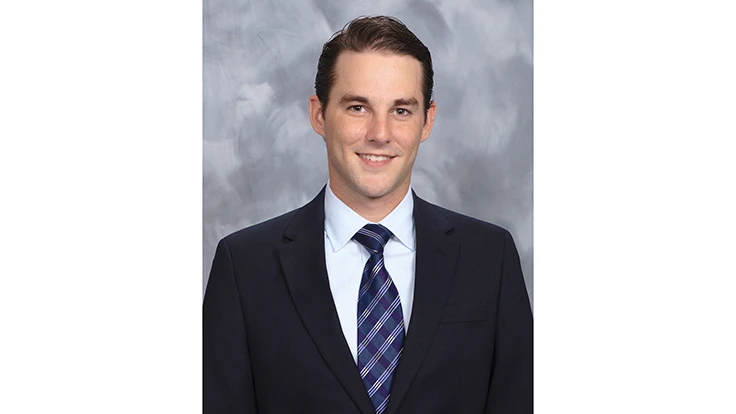
As a success coach, Mike Eisenhuth is a success coach at LandOpt, a consulting firm based in Pittsburgh. He can be reached at mike.eisenhuth@LandOpt.com.
Latest from Lawn & Landscape
- Develon unveils -9 Series heavy excavators
- News you might've missed last week
- Lifescape Colorado's Hupf moves to regional role as Ostheimer becomes president
- Your most reliable predictor of success
- LandCare names McCallon, Miller as branch managers
- Takeuchi-US names Paul Wade, Eric Wenzel as dealer development managers
- CASE continues partnership with country artist Jon Pardi
- Greenlee debuts new battery-powered remote pruner





