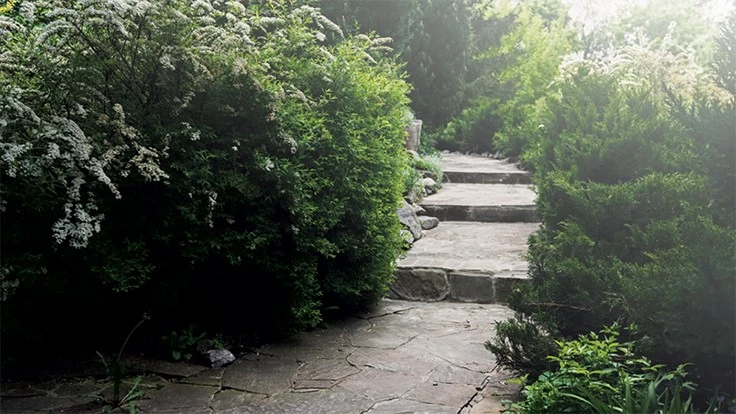
The paths that lead through landscapes can make or break the overall design. Pedestrians will notice mistakes right away if a walkway forces them to go out of their way to get where they’re going – but a well-designed walkway can lead to more satisfied customers.
“It takes a lot of planning and design to get a nice, flowing, functional walkway,” says Herman Solis, owner of Solis Landscape & Construction in Hollister, California. “You’ve got to consider all the surroundings to integrate it all.”
Several factors play into the perfectly planned pathway. Keep these five tips in mind to make your next walkway design more effective.
1. Plot a proper path.
The purpose of a pathway is to guide foot traffic from Point A to Point B. But integrating a walkway into an overall landscape design requires more forethought than just plopping a path between two points.
“Look at the whole layout of the yard and design (the walkway) so the main purpose is functionality and accessibility,” Solis says.
Consider the natural path someone would walk to get from the driveway to the front porch – they’re likely not going to take a sharp 90-degree turn, says Brian Wismer, head designer at NOVA Landscape & Design near Washington, D.C. He says walkways should follow that same natural path, with a minimum width of about four feet.
“It’s important to consider the shape of the walkway and also the flow of traffic,” he says. “When you keep usability in mind, (the layout) works itself out.”
Read the full story from the June issue here.