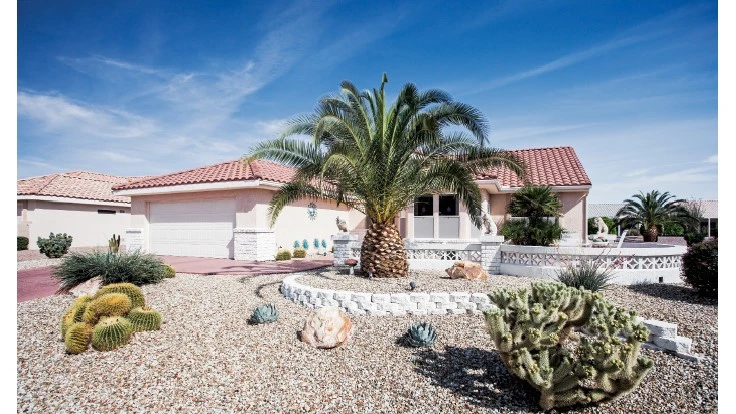
Whether you call it xeriscaping, water-wise landscaping or drought-tolerant design, creating landscapes that conserve water isn’t just for the desert Southwest or drought-stricken regions. Even parts of the country with sufficient rainfall have dry spells occasionally. And many principles of xeriscape save money and time in the long run, not to mention preserving natural resources.
We spoke with co-owners Shane Baldwin and Timothy Langan of Silver Sage Xeriscape & Design, which serves the greater Salt Lake Valley and Summit County, Utah area about how to add these common-sense concepts to your own designs and installations, no matter where you live:
L&L: What does the term xeriscaping or xeriscape mean?
Baldwin: Xeriscape is a total system. It starts with good design that conserves water, taking into account microclimates on the property that use more or less water. We pay attention to appropriate plant selection and choose the right plant for the right place. For example, you don’t put a shade plant in full sun. You choose a plant that isn’t going to outgrow the space to minimize maintenance. We always use mulch, and we install irrigation drip systems so the plants get the right amount of water. We talk to clients about creating a habitat for bees, other pollinators, and wildlife. All these basic principles of good planning work together ultimately to save water, time and resources.
Read more in the July issue here.
Latest from Lawn & Landscape
- Loftness names McComas as chief operating officer
- Wilson360 names Anderson as featured speaker for Thought Leaders Retreat 2026
- Kubota introduces SVL110-3 compact track loader
- Hittle Landscaping acquires Wesley's Landscape & Lawncare
- Aquatrols Company's Precip Acres
- JCB debuts 250T compact track loader, 25Z mini excavator at ARA Show
- Agri-Fab's weed eliminator
- New Holland Construction expands D-Series range with 5 new diesel mini excavators