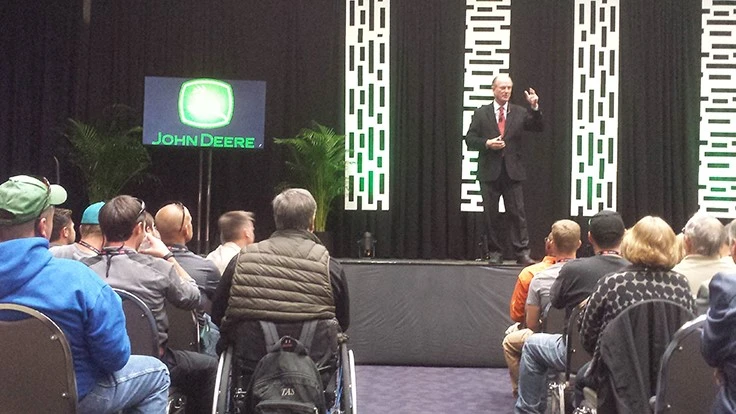
Dr. Robert Ballard talked to a packed GIE+EXPO auditorium about everything from the movie “Avatar” to clams that grow up to be a foot long.
The oceanographer and retired U.S. Navy officer is most prominent for finding the wreckage from the sunken Titanic in 1985, though he’s also led successful expeditions to discover the battleship Bismarck and the USS Yorktown.
Behind his anecdotes from his time underwater was his message to GIE+EXPO attendees who listened to his keynote speech: Adapt, even when you have a plan in place.
“You constantly need to reinvent yourself,” Ballard said. “You’ve got to have a plan. For every five, 10, 15 years, you’ve got to have a plan.”
But Ballard’s plans often went
“That actually probably saved my life,” said Ballard, who was completing the University of Southern California’s ROTC program.
Ballard talked extensively about his experience aboard a submarine, detailing everything from the miniature size of the bunks to why he won’t eat tater tots anymore. Ballard believes there’s still so much of the ocean left to be explored, and that the waters are the world’s best museum because
“I tell children that their generation will explore more of
Sprinkled into his keynote were tidbits of advice applicable to everyone attending the convention this week, particularly about reinventing yourself. Ballard recommends looking at your place in the industry every 15 years or so to adapt with how things have
Just take the planet we live on, Ballard said, which has always adapted, even before humans.
“That’s why the earth is so beautiful. It’s constantly undergoing a facelift,” Ballard said. “The earth is still very much alive, and it will be for a long time.”