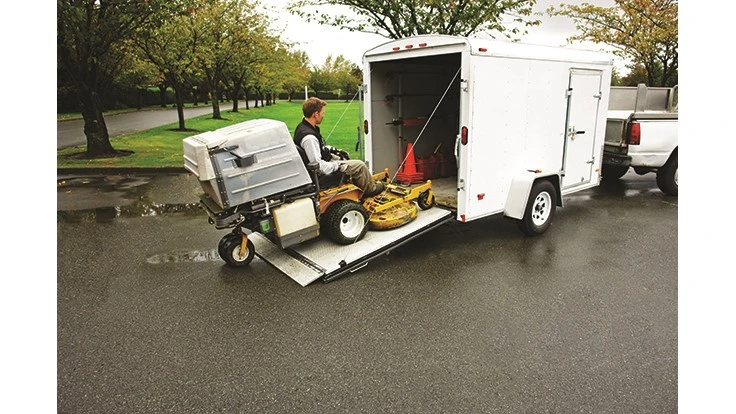
Whether you are a crew foreman pining for the freedom of being the boss or a weekend warrior wishing you could permanently trade your office cubicle for the great outdoors, operating your own business may be a sought-after yet seemingly distant goal. And while the prospect of business ownership comes with risk, incorporating a set of principles could alleviate some of the inevitable bumps in the road when getting your business off the ground. Here are some lessons I’ve learned in my several years in business.
Keep learning
If you majored in Horticulture or Landscape Architecture in college, your coursework likely provided a great foundation. Regardless of the plant and design knowledge acquired, continued learning is paramount. Staying up-to-date with the newest cultivars available at your local nursery and learning about new or worsening disease or insect problems will show potential clients that you are a trusted resource with expertise and answers.
Seminars and conferences could be useful for continuing education. However, I have found that revisiting in-depth plant identification guides, talking to others in the industry and even learning new techniques or skills through online how-to videos can provide invaluable insight without subtracting much time from a busy schedule.
Help clients visualize
Aerial or two-dimensional drawings can be useful, but a picture can help clients better envision the potential of their yard and help create more sales. Some landscape design software allows insertion of plant images directly over a photo. Mulch, rocks, borders, and more can be added to complete the design, which could turn out very realistic after practice. There are software companies that offer a range of design products ranging from $80 to $400, making it an affordable purchase for even a small start-up. Truly visualizing a landscape design proposal as opposed to interpreting a CAD design puts potential clients at ease with how a finished landscape will look. More advanced programs can cost well into the thousands, but the basic software provides a sufficient beginning point.
Structure your business
Leaving an office job and buying a truck, shovel, and mower unfortunately does not immediately make one a successful landscaper. Life does not come with a how-to manual and neither does business. Selecting whether to structure the business as an S-corporation, limited liability corporation (LLC) or sole proprietorship is a personal choice to make. Use a
n accountant or attorney as a resource in the decision. A college professor once told my landscape contracting class that it is not if you will be sued but when you will be sued. Even the most ethical people and businesses need to consider the legal liability protections that incorporating provides.
Hundreds of clients may rave about your workmanship before that first unhappy client. Incorporating can provide some peace of mind when it comes to protecting your personal assets (i.e. family home, car, bank accounts) in the rare instance of a substantial lawsuit. Commercial auto insurance and business liability insurance provide a layer of security for the company. While an emphasis should be placed on consulting with both an attorney and insurance agent, business liability and commercial auto insurance seem crucial regardless of how a business is legally structured.
Specialize
No person can be all things to everybody. Some clients will inevitably ask if you do other work such as gutter cleaning, fencing, or other outdoor odds and ends. While acquiring more work may be alluring, decide early in what areas you want your company to specialize. Perhaps mowing and perennial garden beds are your best trades. If so, politely decline other tasks and provide a referral for those services.
There is a profitable sandwich chain that essentially only sells sandwiches and some chips. While the business could certainly expand their menu options with soups and salads, the company has found a niche by doing one service the best - making great sandwiches fast. This model is a good one to follow, especially if your business resources are limited. Jumping out of your comfort zone can provide opportunities to test your acumen and learn new skills, but it comes with significantly more risk. I have underquoted jobs outside of my expertise by misjudging the amount of time and resources necessary to complete the job. From an immediate financial standpoint, these leaps have generally been of negative impact. However, the skills learned by truly tackling a new project, such as difficult stonework or elaborate waterfalls, has provided indispensable knowledge that cannot be obtained solely in the classroom. Determine your risk tolerance and immediate financial needs prior to deciding which jobs you take on outside of you expertise.
Acquire tax help
“Sandwiched” in between everything else lies one of the least enjoyable parts of business: taxes. This subject is tangentially related to the prior two points about structuring and specializing. Sole proprietorships, LLC’s, and S-Corps, like I mentioned above, have differing tax forms and deadlines. While being hands-on and proactive in all areas of business, recall the tip about specializing. Spreading yourself too thin by trying to remember things like when to file a Schedule K-1 will likely add stress while taking time away from doing what you do best in the lawn or garden. Employing an online accounting service to store and submit tax documents and payments protects your business information in the cloud, and it shifts the responsibility of tax reporting to a company that specializes in just a couple areas as well: accounting and taxes.
Be personable
Word of mouth referrals generally yield the best jobs. Aside from quality workmanship, client/contractor trust is established through initially building rapport. When talking to a potential client for the first time, do not just talk business. Asking about their work, family or pets may seem irrelevant, but provides a window into their lives from which one can draw similarities to themselves. Perhaps the person works in an industry you find interesting (technology, medicine, etc.) or has a similar breed of dog to your canine. Without making this out to be the sole key to success, the importance of talking to the client about other areas of life than simply business humanizes the conversations and builds a level of trust that will not be forgotten the next time someone asks them for a landscaping or mowing referral. If introverted rather than social, one should concentrate on letting the caliber of work speak for itself.
As mentioned prior, word of mouth referrals are second to none. While someone may not be adept at self-promotion and sales, satisfied clients will assuredly spread the name of a landscape company or individual who has completed work for them. Landscape work is also highly visible, meaning neighbors and passersby see it. Think of a landscape as a giant billboard, beckoning additional clients who also wish to have their properties improved. Conversations with neighbors coming over while working on a landscape project have yielded multiple additional clients.
Purchase quality equipment
The big box store may have a $150 push mower for sale that looks too good to pass up. Clients regrettably do not pay someone whose mower breaks down in the middle of the yard. While shelling out over $8,000 for a new brand name zero-turn mower or $300 for a string trimmer may seem initially like digging a deep hole of debt, ensuring the equipment in your mowing and landscaping arsenal is built and designed well will provide the best odds that you will be making money working instead of spending a sunny day paying a repair bill in a shop.
Much of the brand name, higher priced equipment is built with comfort in mind which can guard against muscle fatigue leading to longer, more productive work hours. Developing a spreadsheet estimating the number of lawns that one could mow in a given amount of time employing specific equipment can help break down whether or not a significant purchase is worth the investment. Financing options are often available through a dealership or bank. Implementing a payment plan and using spreadsheet calculations to estimate productivity can alleviate sticker shock and provide confidence in a decision. Leasing is also an option, although I have been pleased with outright ownership and have not sought that route. Minus a work truck, someone looking to start up a new mowing business complete with a single-axle trailer, entry-level commercial zero turn mower, walk-behind mower, string trimmer, and leaf blower should budget around $12,000 to $15,000. Keep in mind that equipment also should be kept in a garage or shed during poor weather or for security purposes, so have a storage situation figured out in advance. If starting funds are limited, beginning with a walk-behind mower and focusing on clients with smaller residential lawns can supply a steady income while saving for a zero-turn mower.
As with most things in life, starting a landscaping or mowing business is not without risk. Even planting an oak tree comes with some risk as to whether or not the tree will survive. However, taking steps such as amending the soil, watering properly, and pruning off diseased branches will ensure the best environment for growth. Likewise, starting a business is not about getting a pickup truck and tools and hoping for the best. Continuing education, structuring the business, establishing client trust and purchasing reputable equipment provide some of the amendments necessary to ensuring your new business grows sturdy and lasting like the oak tree.
Michael Holmes is the founder and owner of Holmes & Gardens Landscaping & Mowing, located in east-central Illinois.