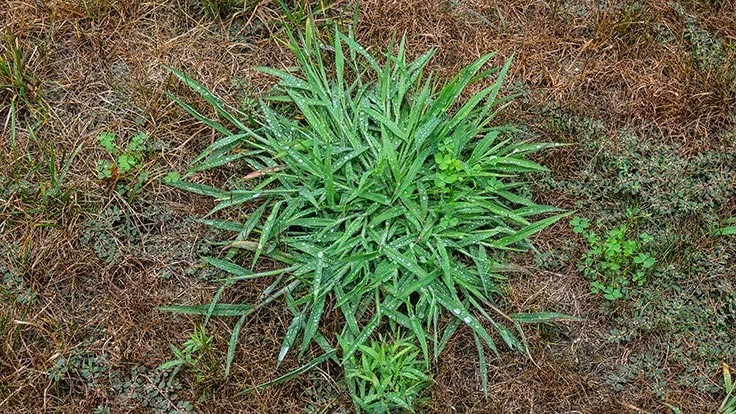
You may be in the clear from early spring weeds, but with summer comes news threats. Crabgrass and goosegrass, the two most common warm-season
Dr. Peter Landschoot, Professor of Turfgrass Science at Penn State University says generally crabgrass and goosegrass aren’t hard to control, but they are ever present.
“Last year in our region we had a tremendous amount of rain in the summer. And when you get rainy summers, even though people put down pre-emergence herbicides, they can break down,” Landschoot says.
If you did your due diligence and applied pre-emergents to your properties, you’ll likely be in the clear, he says. “Pre-emergents will need to last you about three months,” he says. The seeds begin to germinate in May, and sometimes even into June, so the key time for those pre-emergent applications is between late March and late April.
However, if you notice these persistent weeds popping up on your lawn, you’ll need to do some troubleshooting
Stages of growth. Look for young plants in June. The weeds will likely only have two or three tillers. This means you’ve probably applied your preemergent too early, or the weather early on was working against you. The herbicide wore off too quickly, having no impact on the germinating seeds.
If you notice large plants sprouting in June or July – those with multiple tillers – you applied the herbicide too late, and the seeds already had a chance to germinate.
Not all hope is lost if you weren’t able to get ahead of the seasonal weed this year, though.
“I think the important thing is to know which herbicide will control something like crabgrass at which stage of growth,” Landschoot says. “People need to realize that we do have products for postemergence control, but they are different from one another. And you have to know how the product matches up to the growth stage of the crop.”
For those young weeds popping up in June, you’ll want to use a post-emergent with the active ingredient fenoxaprop. The larger more mature weeds will need to be treated with an herbicide containing quinclorac for the most effective results.
“They're warm season grasses, so the further south you go in the United States, I would say typically the more severe the issue is,” he says. “Now there are exceptions to that, but I would say that as you get down into the mid-Atlantic region, like Pennsylvania, Maryland, Virginia, it's also a really bad weed, but it's a little easier to control when you get up into the
Latest from Lawn & Landscape
- Hittle Landscaping acquires Calvin Landscape in Indianapolis
- Agri-Fab 60-gallon sprayer
- Mullin names Scott Miller as COO
- Schill Grounds Management acquires Begonia Brothers Services, Atlas Outdoor
- Lawn & Landscape announces keynote for Technology Conference
- The Harvest Group opens registration for virtual series on compensation strategies
- Granum, Weathermatic enter multi-year strategic partnership
- Rockit Pest adds Green Solutions Lawn & Pest Control in Tampa