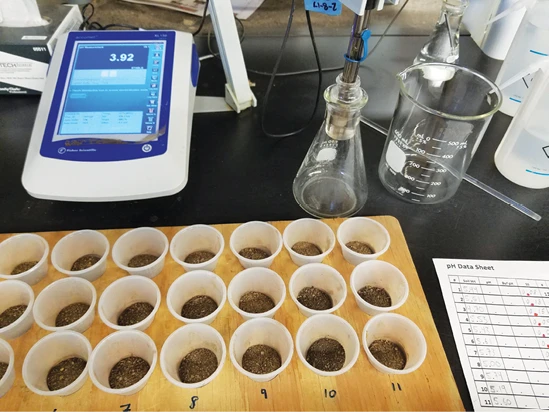
Most soil labs provide detailed instructions for how to collect and submit your soil sample – and even provide ready-made kits for collecting the soil and mailing it in. When collecting your sample, follow the specific guidelines of the lab you are using. These are typically found both on the lab’s website and in information packets provided with the sampling collection kit itself.
In general, though, you’ll want to follow these basic guidelines when collecting your sample:
Choose a representative sample of soil. Collect soil from 10 to 12 spots that are representative of the entire lawn or planting area, in terms of appearance, texture, color, slope
Sample from the root zone. Collect soil at a depth of at least 3 to 4 inches for turf and 6 to 8 inches for ornamentals.
Do not sample after recent rain or application. Sample when
Prepare the sample for submission. Mix the 10 to 12 subsamples of soil together, remove rocks and other debris, and break up any clumps. Scoop out roughly a cup of representative soil to air dry on a clean sheet of paper. Once dry, submit it to the lab in the kit provided.
Provide details about the sample. Most labs will request information about the setting of the soil – lawn, park, garden, golf course, etc. – as well as existing or intended plants in the area. Providing this information on the questionnaire that accompanies your soil testing kit allows the soil lab to provide optimal recommendations for your application.