Kim Lux | Lawn & Landscape
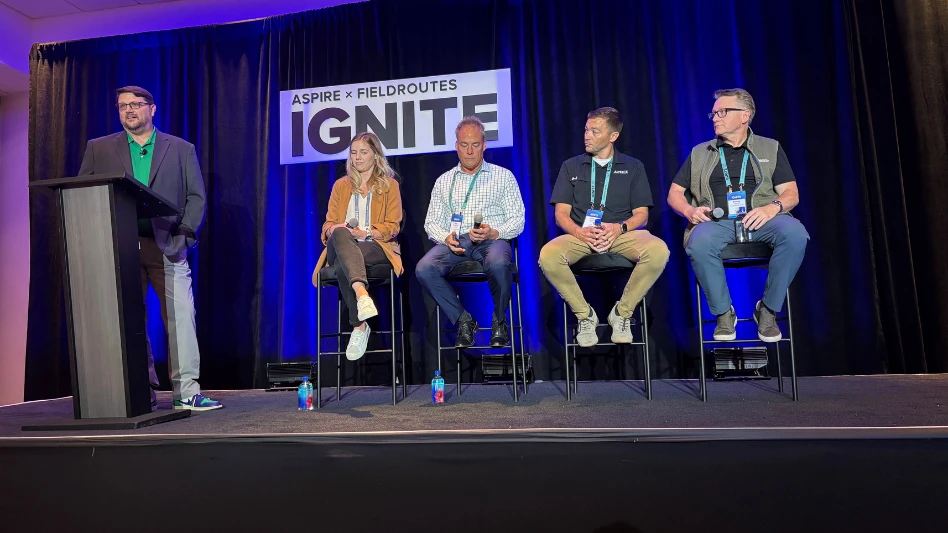
M&A has been red hot in the green industry for months if not years, and that’s not expected to slow down any time soon. To give attendees insight into the buying and selling process, Aspire held an M&A panel at its Ignite event earlier this year.
Panelists included Christianna Denelsbeck, CFO of Landscape Workshop; Allen Sweeny, CEO and founder of APHIX; Rob McDonell, chief development / strategy officer with HeartLand; and Shane Jarrett, chief information and technology officer with Mariani Premier Group.
One of the first, and most important, questions in the acquisition process becomes whether or not to rebrand.
Denelsbeck says Landscape Workshop completely rebrands every acquisition regardless of the size. She adds her company is rapidly performing acquisitions to expand its footprint.
“We do two or three small deals a month if the opportunity is there,” she says.
Though Denelsbeck equates getting a new company onboard to a plane preparing for take off.
“But just like a flight crew, we have a number of things we need to checkoff first,” she says. “One of those is going live with Aspire by the end of Month 1.”
Jarrett says Mariani takes the opposite approach to never rebranding the companies they acquire.
“We don’t want the client experience to change much at all,” he says of their decision.
Sweeny admits when APHIX first became a platform company and was acquiring other businesses he wrestled with the decision whether to rebrand or not. Ultimately, he decided all companies should represent the APHIX name and brand.
“For us we didn’t want to operate different sets of cultures,” he says. “Now, trainings aligned across the business, and we have one mission and one vision.”
Sweeny notes it takes a while to get newly acquired companies onboard and adhering to APHIX’s core values, whose name derives from an acronym of them — accountability, professionalism, honesty, integrity and excellence.
“Neither model is better than another,” McDonell notes. “Some markets only have so much appetite for a national brand.”
Denelsbeck adds that while it may be necessary, it’s never easy for an owner to give up their name and branding post-sale.
“It’s an emotional day when the name comes off the truck,” she says. “We’ve lost deals because of not letting them keep their name.”
That’s why no matter how many deals are done — Denelsbeck says you can’t get callous or take the process for granted.
“Now at 50 acquisitions, you can get desensitized to it but it’s still a big deal in someone’s life,” she says.
Whether or not the owner stays on board is another big decision in an acquisition and can greatly impact its success.
“It’s maybe 50/50 if the owner wants to stay,” McDonell says of his and HeartLand’s experience. “That next layer of management has to be hands-on though regardless… that’s why we do everything we can to get to meet them beforehand.”
After doing so many acquisitions as of late, Jarrett says Mariani has formed an almost alumni club.
“The owner who have retired we give updated to on what’s going on, and we talk leadership and everything else,” he says. “It’s become the ultimate peer group.”
All four panelists say they don’t expect M&A activity to slow down in the green industry. They all also agree that this is for the best.
“The more strategic acquisitions drives competition,” Sweeny says. “It just continued to make us better.”
Denelsbeck agrees, adding that private equity’s involvement in landscaping in particular will only help improve things for everybody.
“Companies with access to capital will benefit the most from emerging technology,” she says.
Latest from Lawn & Landscape
- Develon unveils -9 Series heavy excavators
- News you might've missed last week
- Lifescape Colorado's Hupf moves to regional role as Ostheimer becomes president
- Your most reliable predictor of success
- LandCare names McCallon, Miller as branch managers
- Takeuchi-US names Paul Wade, Eric Wenzel as dealer development managers
- CASE continues partnership with country artist Jon Pardi
- Greenlee debuts new battery-powered remote pruner





