.jpg) |
It's busy season again, and not just for landscapers. Pests are coming out of dormancy and they're hungry for your customers' plants. Here's what you should be vigilant for as the weather warms up.
Lawn pests
Billbugs. These are a persistent problem and feed on turf in the early summer, especially on Kentucky bluegrass lawns. A good imidacloprid product should solve the problem with an application and a follow-up two weeks later. The lawn will require extra watering after grub damage in order to establish new roots.
Chinch bugs. These pests could be a problem on St. Augustine grass. While their damage looks like drought or root rot, the bugs can be identified on closer inspection. Simply cut the end off of a coffee can and insert it in the ground. Pour water into it for about five minutes and see if the bugs float to the top. Chinch bugs love nitrogen, so be wary of over fertilizing, as it can actually help the bugs mature faster and lay more eggs.
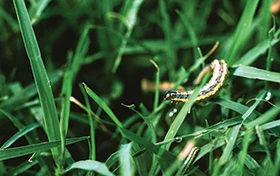
Fall armyworm. This is a problematic pest in the South, and is most severe in late spring through summer, depending on the region. Affected areas will yellow and the turf will thin, and most infestations start near a wood line or tree. You can spot the ½ to 1-inch caterpillars on visual inspection. Technicians servicing Bermudagrass should especially be on the lookout.
Ornamental pests
Mites. Depending on the weather, mite infestations can range from spring to fall. You can spot the pests’ damage by looking for bronzed or chlorotic leaves. Drought can make them more active and cause more stress to the plants.
Thrips. Thrip damage looks like a small silver line or vein on a leaf. Or, it can lead to stunted plant growth. Be sure to look at the undersides of leaves as that’s where most of the damage occurs.