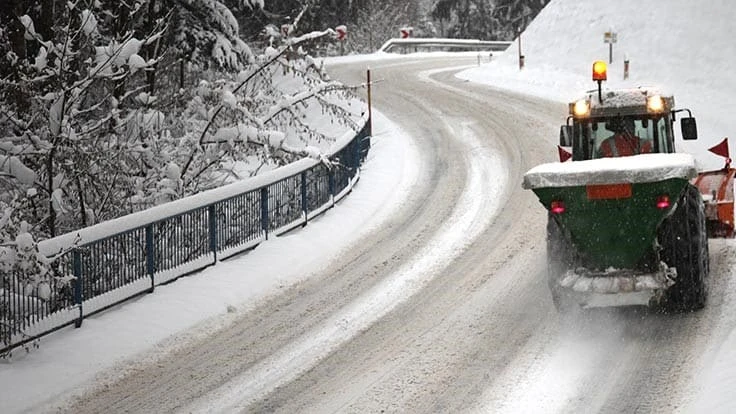
Sustainable landscaping practices are easy to define and put in practice, in part due to the vast amount of research on how methods impact the surrounding environment and the laws that legislate chemical usage. However, achieving sustainable snow and ice management practices is something the industry is still working toward. For environmentally conscious companies this means establishing and following our own guidelines in determining what’s best for our customers, our company, and the planet.
In the 25 years we’ve been providing commercial snow removal and landscaping services to customers, we’ve prided ourselves on being stewards of the environment. And for the most part, we’ve been successful in this endeavor. Unfortunately, the practice of removing snow and ice isn’t the best for the earth. Ice-management products like salt and liquid deicers are essential to keeping pavement safe for walking and driving. Likewise, each product has a different level of impact on surrounding watersheds and soil, as well as plant and animal life. It’s forced us to do our due diligence and to take a close look at the following.
Deicers and Ice Melt Dangers
Over the years, signs of pollution in our water and soil has caused more people to take a closer look at the exact toll road salt and deicers have taken on the environment.
For example, researchers at the University of Minnesota found that 70 percent of the salt applied to the roads near the Twin Cities makes its way into the region’s watershed. This impacts not only aquatic life, but it also takes a toll on municipal water systems.
Likewise, research shows bulk salt applied to pavement colder than 15 degrees Fahrenheit has little to no effect. For property managers and snow removal contractors, this means pretreating roads and walkable surfaces before they reach that temperature is essential. When done correctly, the result is less bagged ice-melt material on roads and walkways.
Chlorides Vs. Acetates Vs. Carbohydrate Deicers
In addition to rock salt, there are numerous ways the chemical makeup of your preferred deicer impacts the surrounding ecosystem.
The two main types of deicers are chlorides or acetate-based products. Without getting too far into the chemistry of these products, it's important to understand that chlorides and acetates are both salts, but they are derived from different compounds—chlorides from hydrochloric acid and acetates from acetic acid. It’s this difference that determines the effect that the deicers will have on the surrounding environment.
Chloride deicers are widely considered to be the greatest polluters because they’re not biodegradable, which means they easily make their way into groundwater and soil. Plants that come into contact with chlorides can have a difficult time absorbing water and nutrients from the soil, causing them to dry out.
While acetate-based deicers are biodegradable and can result in much less runoff than chloride-based products, research shows they also make it more difficult for soil to retain water and air. Depending on the location the acetates are applied, this could result in structural vulnerabilities to concrete structures over time.
Carbohydrate deicers like beet sugars are often praised because they’re a natural, non-salt alternative to industrial deicers. However, they are not immune to shortcomings either.
For one, these products don’t melt ice, but rather lower the freezing point of ice more than salt can and helps bulk material to stick to roads better, requiring less applied. Therefore, it’s most effective when used alongside salt or liquid material rather than in place of it.