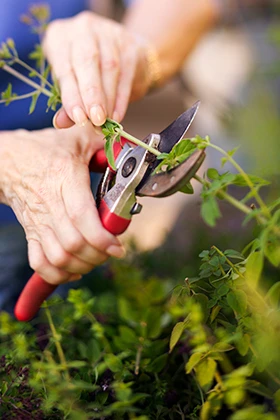
Without the right tool, pruning can be dangerous not only for workers, but for plants as well. A pruner that’s too small can lead to fatigue, and dull blades can injure the tree or shrub. Plus, it can do serious damage to the tool itself.
“You can actually throw the blade out of line and they’ll never cut as good as they did when they were new,” says Certified Arborist Elden LeBrun with Bartlett Tree Experts.
Without a good, clean cut, you can damage the cambium layer of the tree. This is the layer that adds new layers of phloem and xylem, so if it gets crushed during pruning, it will slow the healing process.
Lebrun uses bypass pruners and loppers rather than the anvil type to get a better cut. “I think they work better,” he says. “They don’t crush the stem and you can get a nice, closer cut.”
While bypass pruners work like scissors, anvil pruners make a cut when the blade comes down against a piece of flat brass. “Anvil tends to be cheaper and they don’t make as clean a cut. They tend to crush one side of the stem when you’re trying to make a good cut.”
LeBrun says he’ll switch from pruners to loppers when the going gets tough or he has to use both hands to make a cut. He says a 16- or 18-inch handle is good for larger cuts. However, he never uses loppers on trees, opting instead for a straight-blade hand saw for younger or smaller trees.
Latest from Lawn & Landscape
- Develon unveils -9 Series heavy excavators
- News you might've missed last week
- Lifescape Colorado's Hupf moves to regional role as Ostheimer becomes president
- Your most reliable predictor of success
- LandCare names McCallon, Miller as branch managers
- Takeuchi-US names Paul Wade, Eric Wenzel as dealer development managers
- CASE continues partnership with country artist Jon Pardi
- Greenlee debuts new battery-powered remote pruner





