.jpg) |
Weeds are generally not top of mind after you ring in the New Year, especially with cooler temperatures and snow cover in some parts of the country. Across the country, the first months of the calendar year offer a slower pace for green industry businesses (unless you’re plowing, of course).
But now is the time to keep weeds on the radar. There’s no real hibernation in landscaping. Weed germination can begin in late January and February in warmer states.
Here is your guide to weed issues for the first quarter of 2015.
Northeast.
Snow cover through April buries turf and ornamentals, and delays weeds that wait until the white stuff melts to make an appearance. Spring can come as early as mid-March, or not set in until May – and even then, temperatures can stay quite cool. Still, there is disease and weed pressure that LCOs should mind during this first quarter, and especially in April.
Crabgrass: Early spring is not too soon to begin thinking about a crabgrass prevention strategy for summer. Once temperatures hit a steady 55 degrees, pre-emergent herbicides can be applied to turf and ornamentals. Refreshing beds with mulch in early spring will prevent weeds, including crabgrass, from cropping up. And in the lawn, adopting good turf cultural practices will go a long way toward preventing this grassy weed when the weather warms up for good.
“Proper mowing, fertilization, soil pH correction and proper irrigation all contribute to the production of a healthy and dense turf that has the ability to compete against crabgrass and other weeds in the turf,” says Randall Prostak, University of Massachusetts Extension weed specialist.
Perennial weeds: The usual suspects are weeds like quackgrass, orchard grass (in ornamental beds) and fine fescues that can green up early. Spot-treat these with a glyphosate-based product, Prostak says, suggesting that LCOs consult their product distributors to source the correct formula.
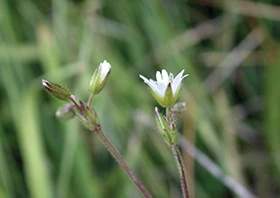
Winter annual weeds: Winter annual weeds germinate in the fall and winter, and sprout in early spring. Some common weeds are henbit, chickweed, deadnettle, annual bluegrass and wild mustards. “I call winter annuals the forgotten lifecycle because in the fall, people are praying for the end – and there are weeds there, but at that point it’s time for fall cleanup and fertilization,” Prostak says. Sometimes that post-emergent application is ignored.
As long as a lawn is actively growing – as late March in this region – a broadleaf post-emergent herbicide application can help knock out those winter annuals. “If the weeds are in landscape beds and very small, they can be smothered with mulch,” Prostak says. Sizeable weeds should be spot-treated with a glyphosate.
Southeast/South.
With warm- and cool-season grass varieties in this region, some lawns might be battling weed and disease while others (namely tall fescue) are looking their best January through March. “You may have some brown patch pop up (in tall fescue), but I wouldn’t consider that a major disease problem at that time of the year,” says Clint Waltz, turfgrass specialist at University of Georgia.
Tall fescue might respond to a few consecutive days of cold, cloud-covered weather by turning a bit brown. “But that’s a cold injury response and not a disease issue, and all it takes is a change in environmental conditions for the tall fescue to bounce back,” Waltz says.
On the other hand, southeast LCOs should keep these weeds and diseases on their radar:
Winter annual broadleaf weeds: In late January and early February, henbit, chickweed, dandelion and Carolina geranium crop up. “Catch these weeds early in the year when they are small by controlling them with a three-way herbicide,” Waltz says. Once March sets in and temperatures rise, these weeds grow quickly and are more challenging to control.
“Post-emergent applications in January and February will serve you well moving into the middle and latter part of spring,” Waltz says. LCOs should scout properties in mid and late January – Waltz recommends “boots on the ground” – to identify weeds before they get out of control.
Annual bluegrass: This winter grassy weed is tough to control in tall fescue grass. “You have a cool-season grassy weed with a cool-season desirable turf,” Waltz says. The fine-leaf grass puts out seed heads in January and February. “Once we get past the middle of February, it’s hard to control,” he says, relating that there are no real effective control options in tall fescue.
“In warm-season grasses, you have some options,” Waltz says. “If you catch annual bluegrass before [its diameter] is the size of a quarter, you can apply atrazine in centipede and St. Augustine lawns, and in dormant zoysia and Bermuda grass.”
American burnweed: When developers stopped working on acres of cleared lots that were slated to be housing subdivisions, invasive weeds took over the neglected properties. American burnweed, a summer broadleaf weed that germinates in the spring and can grow up to 8 feet tall, became pervasive. Its seed heads were carried by wind to surrounding properties, and now LCOs need to keep an eye out for this weed in home and commercial lawns, Waltz says.
For lawns in developments with vacant lots or where these weeds are present, it would be wise to put town an herbicide application of isoxaben,” Waltz says.
Photo courtesy of Mary Ellen (Mel) Harte; Bugwood.org