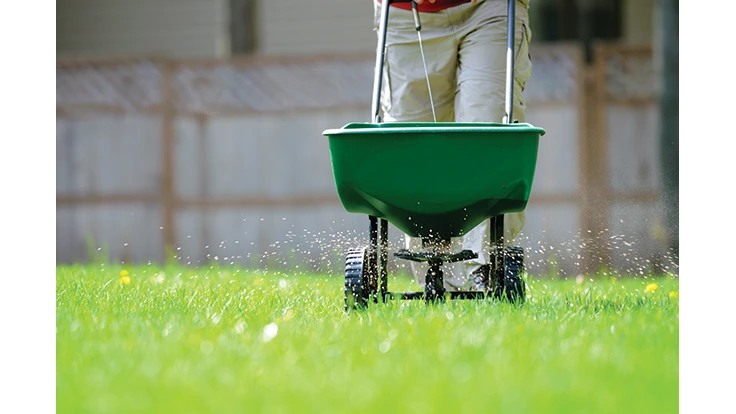
Spreaders and sprayers haven’t changed a great deal over the years, according to these LCOs. It’s mostly an “if it ain’t broke, why fix it,” situation.
If there have been any changes, it’s with the sprayers which have seen improvements in the pumps and the number of hoses that can be used at one time. It is also easier to calibrate the new machines.
Since they hold their value well, purchasing used spreaders and sprayers may be an option, just be sure to carefully inspect the entire unit before purchasing it.
As for backpack sprayers, they haven’t exactly gone the way of the typewriter in the lawn care industry. They come in handy for spot weed control and around rocks in a rock garden, according to Fit Turf founder Paul Wagner, a point that was echoed by the other LCOs.
Maintaining performance.
Much like you wouldn’t take shortcuts servicing a customer’s lawn, the same should be said for your approach to performing maintenance on your spreaders and sprayers. If you consistently adhere to best practices not only will this important equipment go the distance, but you’ll consistently and efficiently apply the products that keep lawns looking beautiful.
The number one rule in spreader maintenance, one that many a foreman harps on, is keeping the hoppers free of the corrosive material you’re using.
A telltale sign of a slipshod operation is product left in a hopper “until the next application.” The screens in the hoppers will clog quickly, resulting in inconsistent application of fertilizers and other lawn care products.
“Some of our crew members are pretty good about pulling the grates out,” says Nick Brummel, CEO of Brummel Lawn & Landscape. “And we find if they do they clog up, chunks of product fall through and clog the spreaders.”
As for maintenance, he says to make sure you grease them and clean them out since the product is pretty corrosive.
“We have maintenance kits on each truck,” Wagner says. “Oil changes, lubrication, cleanliness of the units is the most important thing.
“If you neglect any of this – and it has to be done on a daily basis – you’re going to have something that is going to break down.
Sprayers are a little different animal when it comes to maintenance. The ride-on machines need regular oil changes.
The hoppers and hoses also need to be flushed regularly to rinse out corrosive product. And of course sprayers and spreaders alike need to be properly cleaned, drained and stored in the winter so they’re ready to go before the first flush of growth in the spring lawns.
Perhaps Wagner sums it up the best when it comes to purchasing and maintaining spreaders and sprayers:
“If you expect to be in business for a long time, spend the extra two to three thousand dollars and buy the best equipment and maintain the hell out of it,” he says.