White clover is the perennial bane of residential and commercial lawns all over the country. It can grow under almost any soil conditions, which is why it was once included in grass seed mixes.
But customers don’t want to see it in their lawns anymore, so what can you do if it starts to take over?
The flower has a very fibrous and efficient root stem and it can send out nodes at the joints. Combine that with its prolific seed production and it becomes a real nuisance. And since seeds can stay dormant for an extended time, they’ll keep on coming back.
 The first step to control is identifying the weed. White clover forms mat-like patches with mostly smooth stems and leaves arranged by threes and fours. The flowers are mostly white, but often have a pink or purple tinge to them.
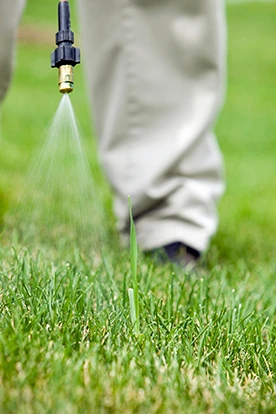
The Clemson University Extension says a three-way herbicide is safe for bermudagrass, zoysiagrass, centipedegrass, St. Augustinegrass and tall fescue. That would be herbicides with 2,4-D, mecoprop and dicamba, but not triclopyr.
But a word of warning: Don’t apply three-way herbicides when temperatures are 90 degrees or higher. And, 2, 4-D should be applied at a reduced rate on St. Augstinegrass.
Another option is to simply pull the plant out by its shallow roots and reseed over the bare spot.
White clover can be a sign of low nitrogen in soil, so an application of nitrogen fertilization can help reduce clover and improve the health of the grass.