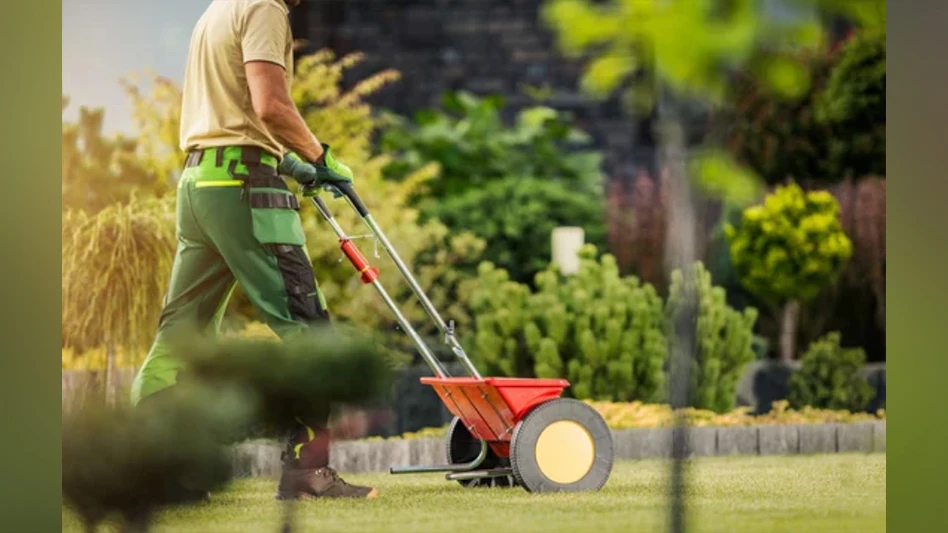
After seven years in business, Ryan Dittes from RD’s Total Lawn in Pennsylvania opted into lawn care service for the first time this spring.
His team of 10 employees offers other services like maintenance mowing and snow removal in the winter. Still, Dittes — who just officially made running this company his only full-time job — saw potential in lawn care.
So far, so good.
“I always wanted to get into fertilizer weed control; I just didn’t have enough bandwidth. When I left my day job, I felt like I had the capacity to take on something new,” Dittes says. “Something more relatable for everyone else: I hired a coach and his specialty is really digging into the numbers. Once I really knew my numbers, and I saw the gross profit on fertilizer weed control, it was obvious. Knowing my numbers really well opened my eyes.”
Dittes explains three different reasons why landscapers who aren’t in lawn care should consider jumping into that segment of the industry.
More revenue per employee
Dittes noticed the money he could make in lawn care with his growing team of just under a dozen employees. Whereas his mowing guys could create $150,000 in top line revenue per worker, he’s seen about $350,000 in top line revenue per worker in lawn care.
"The one most important thing is the revenue and gross profit there is per employee,” Dittes says. “Long-term, it means I need less employees to grow the company.”
There’s a higher barrier to entry
At first glance, that might seem like a bad thing. Dittes had to study and apply for his spray certification before adding the service to his company. But that higher barrier to entry also means less competition is entering the market year in, year out.
“With lawn mowing, there’s so much competition. There’s still a lot in fertilizing, but the competition is a bit more serious. (In maintenance), you can just grab a truck and push mower and you’re a business,” Dittes says. “Everybody’s a lowballer when you start. I was a lowballer when I started. The problem with lawn mowing is, there’s a lot of people that start.”
The seasons are longer
Dittes says they can spray lawns from mid-March to December in Pennsylvania, and that’s about a month earlier and later than services can run in mowing. Plus, the work is more predictable and reliable than other segments like snow removal, where Dittes says he’s been frustrated at times with a lack of work-life balance.
“(Lawn care) gives me two months longer of a season, which is key when you’re trying to employ people” Dittes says. “We do snow removal out of necessity for income. There’s great margins in it and all that… but I don’t like being on call, essentially as an emergency service.”
Latest from Lawn & Landscape
- Your most reliable predictor of success
- LandCare names McCallon, Miller as branch managers
- Takeuchi-US names Paul Wade, Eric Wenzel as dealer development managers
- CASE continues partnership with country artist Jon Pardi
- Greenlee debuts new battery-powered remote pruner
- Autonomous Solutions acquires Scythe Robotics
- Our March issue is now live
- New Holland Construction's E12D mini excavator