Jimmy Miller | Lawn & Landscape
Between artificial intelligence in landscaping to lessons learned from decades in the industry, the Wilson360 Thought Leaders Retreat spanned several important topics to landscapers.
Lawn & Landscape recently traveled to Denver for Wilson360’s annual Thought Leaders Retreat. Here’s some of what we learned in Colorado.
Bruce Wilson's career
lessons
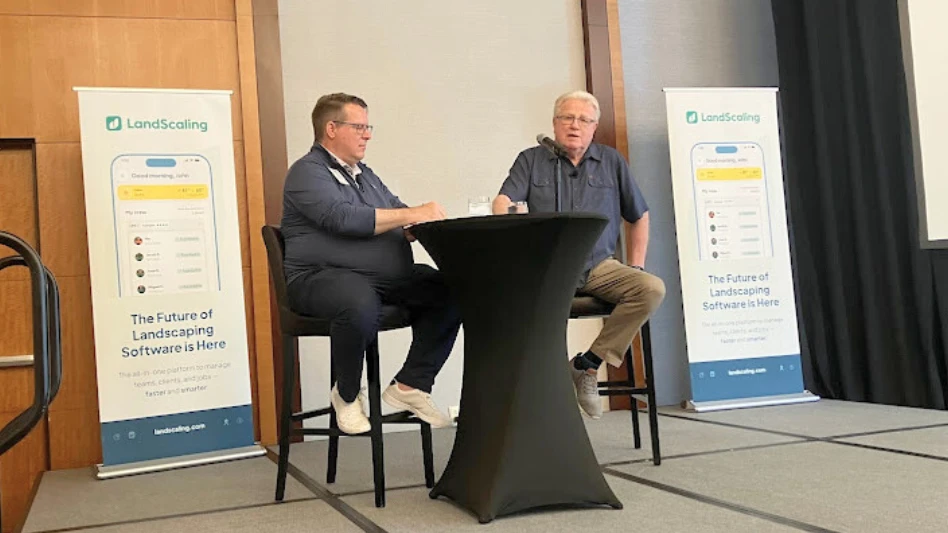
To round out this year's TLR event, Bruce Wilson — the founder of Wilson360 and seasoned industry veteran of over 40 years — talked to employees during a Q&A session.
The conversation was moderated by Wilson360's Joe Kujawa, a senior practice leader at the company. Here's just a bit of what Wilson told attendees at the event. Some answers have been edited for clarity.
What have you found is the most effective way for growing your business?
Well, that's evolved, actually. I think probably the best thing is... helping our employees build their careers. In order to build their careers, we had to grow. We didn't have to push growth so much because they all wanted to grow so they could get their next promotion. And we had a culture of promoting from within, training your replacement. And the part about that that worked is, we didn't promote somebody if they didn't have their replacement.
So I think that's kind of the best way to grow. And do good work. In doing good work, I think sometimes you get customers that aren't willing to pay for good work, but they want it. You better do it. Otherwise, you take on a loser and you don't keep it. There's no win for anybody. I think I built most of the operations that we had on operational excellence. We didn't want mistakes.
We didn't want sloppy work. If you make a mistake, fix it before the customer finds out about it. Or tell them before, if you can't fix it before, that you know about it and you're taking care of it.
What books have influenced you the most? Any recommendations for teams or leaders?
Well, the one that everybody should read is probably the hardest one to read, and it's called The Fifth Discipline.
In the very beginning of the book, it pointed out that the only lasting competitive advantage a company had is to learn faster than the competition. From spending years having people copy what we did all the time, and we had to keep doing new things to stay ahead of them, that really hit me. The discipline is about learning organization, so you have to build learning into your organization.
You are a big baseball fan. How is business like baseball?
You've got to play all nine innings. The game is never going to be over, actually. When you're in a business, you've got to play hard every day. And you have to get your employees to realize they have to play hard every day.
Bring your best game. It's not okay to lose a playoff game and say, oh, well, we weren't on our game. How could you be a professional team, professional player, play a game that means so much, and say, "Oh, well, we weren't on our game?" You've got to be on your game.
Were there ways that you've done that where you've built it into your culture?
Talk about it all the time. Keep it front of mind.
Identifying your "low shelf" issue
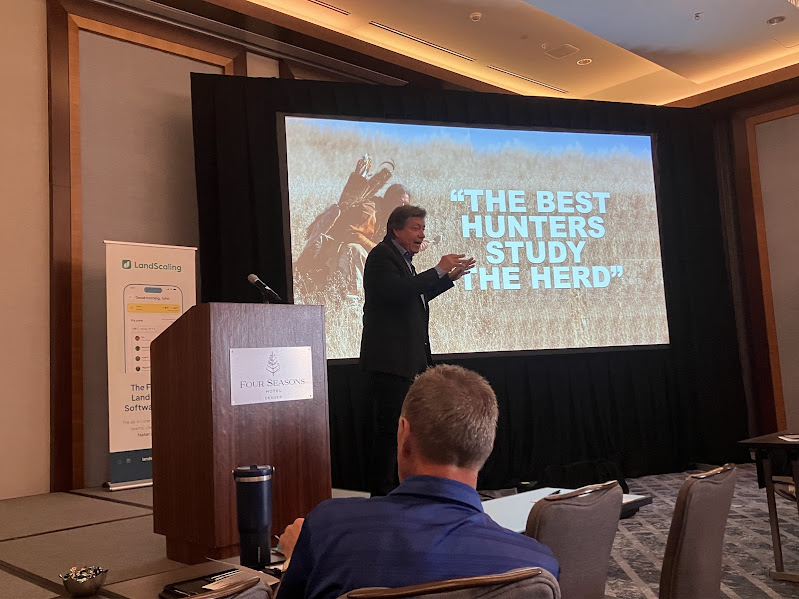
Keynote speaker Ross Shafer has made an unusual habit of visiting conferences he wasn't invited to — and he's proud of it.
"Crash the wrong meetings and stay for at least 10 minutes," Shafer says, adding that he's done this plenty of times by approaching the badge table and just admitting he didn't have a badge. “It’s a free way to stay creative and hear about the problems other organizations are having.”
As a result, he's sat in at plenty of meetings across a variety of industries — and he learned something valuable he took to his clients as a business consultant.
Overheard at one meeting? We're so busy we don't even plan what we're having for dinner until 4 p.m. Shafer took that nugget of knowledge to his client, McCormick and Schmick's, which launched a radio campaign that'd go live at 3:30 in the afternoon, promising listeners they could have a hassle-free dinner. The result? A revenue spike of nearly $2 million.
Also overheard at a pharmaceutical meeting: CVS Pharmacy had discovered that lots of its back pain medications were placed on the lower shelves at stores. Gone would be the days where people with back pain had to bend down to retrieve their medications.
This taught Shafer something incredibly valuable — everyone's missing something that causes friction for their clients.
"What is your low shelf issue? Everyone has them."
Shafer, a six-time Emmy winner, former comedian and television show host, has helped consult with companies and aided in selling 23 of them.
Artificial intelligence in landscaping
In just seconds, Nick Machol generated an eight-second video for Wilson360 Thought Leaders Retreat attendees that welcomed them to the event.
To open his session, “The AI Playbook for Growth-Minded Leaders,” Machol showed off different fun ways people can apply artificial intelligence. He asked ChatGPT to generate the video to make him look handsome with an athletic build – and to put a Flavor Flav clock on his neck. He tasked it later with creating a Neoclassism portrait of him, plus an Expressionism and Gothic version.
But, as Machol later illustrated, AI is becoming so much more to landscapers than just a fun diversion – it’s a tool that landscapers must prepare to use regularly. He’s found that most people are getting on board but just don’t know where to start.
“Everyone wants AI proficiency, and the reason for it is we’re all convinced now,” Machol says. “This is a transformational technology that is disrupting every facet of the professional environment that we work in. Because of that, it’s now an expectation that you are proficient.”
Machol, an adjunct professor at the University of Denver and the new CEO and founder of an AI group called unburdn AI, says there’s three levels to learning AI – crawling, walking and running. This progression looks like:
- Crawl: Often using a large language model; know how to build basic AI bots; apply brute force augmentation to shave time off tasks or improve accuracy
- Walk: Automate workflows across platforms; can create viable coding prototypes; explores more advanced tools; expands AI adoption throughout their organization
- Run: Deploys agentic AI in production; develop AI direct reports
“Most people in the working in the world will be in a really good position if in the coming months, they are crawling,” Machol says.
And Machol clarifies that those without any experience in coding can still jump headfirst into artificial intelligence. He showed an example to attendees on how quickly they could use AI to create a tool that generates sales proposals or websites.
“I want you to start thinking about AI like we would the early internet,” Machol says, clarifying that just like the early internet, it was imperfect and often made mistakes. “It is high friction, and it is frustrating. But AI, when used properly, is an amplifier, not a replacement.”
Machol offered TLR attendees his laws of AI Excellence. He believes these rules will help folks implement AI in a way that’s meaningful to their businesses.
- The Don’t Give Up Mindset (MAFO) – Mess Around and Find Out. “The folks that I find that are succeeding the most with AI transformation, they keep playing with it,” Machol says. Sometimes a three-hour task takes them four hours because they’re playing with AI, and other times, a five-hour task takes 10 minutes.
- AI as an amplifier, not a replacer. Find ways to leverage AI to get more out of you, not to replace you.
- Best prompts= Context + Persona + Data + Task. Machol says writing prompts in this format will help ensure a better experience with AI.
- Try it all; don’t get married. “ChatGPT is sort of the household name right now. A year from now, they might still be. You might also still have them as a distant memory,” Machol says. He says we are in the middle of an AI arms race, with tons of money being thrown into the ring. Machol encourages attendees to pay close attention to the news to ensure they’re not missing out on new advancements.
- Confident incorrectness comes standard on these tools – fact check them often. A month ago, ChatGPT tried to unintentionally kill users by encouraging people to mix bleach with vinegar. “Treat it like you would a really good employee,” Machol says. “Spend five to 10 minutes still fact checking them.”
- Use it, use it, use it – and rely on it! Machol says practicing with AI often may not make perfect, but it will make someone go from crawling to walking with AI.
All of that in mind, Machol acknowledges it’s an uphill climb, especially with company-wide implementation of AI.
“It is not another piece of software. You’re now asking people to think entirely differently about how they do their jobs,” Machol says. “It is a cultural shift and cultural shifts take time.”
Create a strong company culture for emerging employees
Phil Allen is a professor of landscape management at Brigham Young University, and he's directed the school's National Collegiate Landscape Competition team that's won national championships in years past. As a result, he's taught hundreds of students going into the horticulture field. Enrollment this year in the BYU program sat at 140 students, 70% of which are women.
At events like TLR, Allen says he talks with company owners about what makes them an employer of choice. Allen jokes that often, after a few drinks, these owners promote their strong company culture — but they don't know what makes their company culture so strong.
“When I ask you to describe your company culture and the first sentence has 'barbecue' in it, you may not be at the level of professional maturity that’s (indicative) of quality hiring companies," Allen says.
Allen says young workers want to be in an environment that is an extension of social connections. They require constant feedback, feel that it's a collaborative workplace and they should have a good relationship with their managers.
As part of an assignment, Allen tasks his students with writing about what type of company they envision as most desirable for a post-graduate landing spot. The words he must often sees: "onboarding," "training," "mentoring," "fun" and "safe."
He illustrated this point with a story from this past year: Allen had two students pick up internships as river guides on the Moab section of the Colorado River. When he emailed them both to see how the internships were going, one student wrote back that they were having a great time. The other? They reported a safety scare on something they were never trained on, and they said they didn't feel comfortable asking their boss questions so they weren't perceived as incompetent. One student started before the rafting season began; another student started after the business opened for the summer.
Allen draws parallels to that experience and how landscapers will hire employees midway through the lawn care or maintenance seasons. He urges landscapers to consider how they're training their employees.
“Can we do better? The answer to that is: 'Do you want to be a destination company?'" Allen says. "You need a system for onboarding that isn’t thrown out the window the moment your season starts."
Check back with Lawn & Landscape for more coverage from Wilson360's Thought Leaders Retreat.
Latest from Lawn & Landscape
- Develon unveils -9 Series heavy excavators
- News you might've missed last week
- Lifescape Colorado's Hupf moves to regional role as Ostheimer becomes president
- Your most reliable predictor of success
- LandCare names McCallon, Miller as branch managers
- Takeuchi-US names Paul Wade, Eric Wenzel as dealer development managers
- CASE continues partnership with country artist Jon Pardi
- Greenlee debuts new battery-powered remote pruner





