Porvair Filtration Group’s Sinterflo MC metal mesh composite product line - manufactured in Ashland, Virginia - is being deployed with significant results.
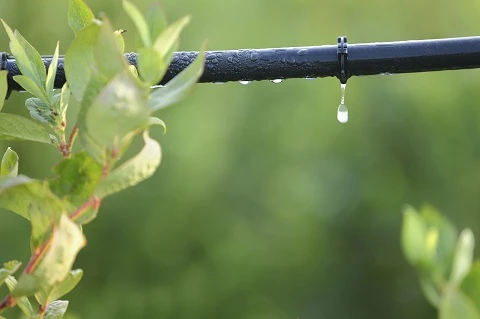
These filters are fitted to drip lines, which are considered to be the most effective method of watering crops. They are also environmentally friendly because they prioritise the efficient use of water.
Drip lines, which harness multiple nozzles spread along their length, allow an entire crop to be watered at once so that the plants receive only as much water as they need.
Trevor Waghorn, Porvair’s vice president of sales and marketing said: “The drought in California is one of the more serious problems facing the United States, and Porvair is currently playing a role to help combat this as we continue to see a long-term shift to more efficient irrigation systems.
“Managing water has never been more important and, using the correct filters, drip lines can drastically reduce wasted water in the agricultural sector. We consider them to be a highly effective and efficient tool for farmers at a time when every last drop of water is essential.”
Californian crops are hydrated using water which is reclaimed from wells. However, there is a danger that this may be contaminated, so it is necessary to fit filters to the head of the drip line to prevent any related blockages. Should the line become blocked, it has to be removed, cleaned and reinstalled - a costly and time-consuming process.
Porvair’s filters are designed to cope with all of the various contaminants that can build up over these nozzles. There are a range of different micron ratings and sizes of filters for use with different types and volumes of water; these are appropriately colour coordinated for ease of recognition.
The product line employs Porvair’s proprietary Sinterflo MC 316L stainless steel metal mesh composite with plastisol sealing gaskets, to ensure that no particulate by-passes the filter.
As well as helping to ease the Californian drought, Porvair’s products are used in Florida to provide water to citrus fruit farms, golf courses and botanical gardens.